
Apart from diamonds, few things are as synonymous with wealth as gold. While people have long prized this precious metal — dating back to 3600 BC when it was first smelted in ancient Egypt — the history of its use in food is not well documented. But in modern times, gold as an ingredient is a popular way to add a glamorous touch, from a lavish dessert to a fancy cocktail and even the ribeye cap of a steak.
Edible gold has been used as an ingredient for at least 5,000 years in areas such as Asia, Africa and Europe. Throughout its culinary history, edible gold was believed in some cultures to provide spiritual purification, rejuvenation or medical benefits. It was utilized in religious ceremonies and other cultural practices, among other uses.
 Historians believe ancient Egyptians ingested gold for spiritual purposes and its supposed divine properties. In Japan, kinpaku (gold leaf) has been used for centuries to decorate wagashi: traditional sweets, sake and tea. It’s a symbol of prosperity, luck and celebration, prevalent during important events like weddings and New Year’s festivities. In India, gold and silver leaf (varak) have been used to adorn sweets and traditional delicacies for hundreds of years.
Not all gold is edible. The gold chain in your jewelry box would be toxic to consume. The manner in which it’s consumed is as edible gold leaf, a food-safe version used as a decorative ingredient. Edible gold is made of 99.9% 24-carat gold, which is the highest purity that can be tested. Eaten alone, edible gold has a slight metallic flavor. But used as a decoration on a dessert or savory dish, the flavor is easily overpowered by other ingredients.
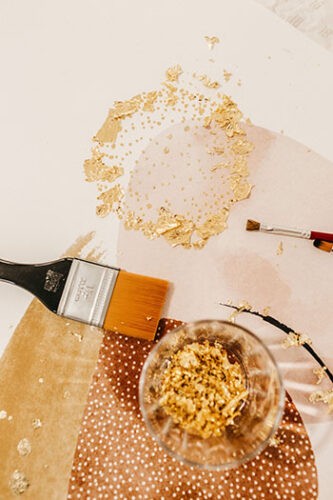
To make it, pure gold is melted at over 2,000 degrees F and poured into a bar formation. That bar is stretched thinly through rollers, then hammered flat until it achieves a thickness of .0001 millimeters. As an ingredient, it’s very fragile and must be applied using a fresh paintbrush, tweezers or as a powder. To make a powder, culinary creatives apply vodka (or lemon juice for less luster) to the gold leaf, which dries it out and turns it into a fine dust.
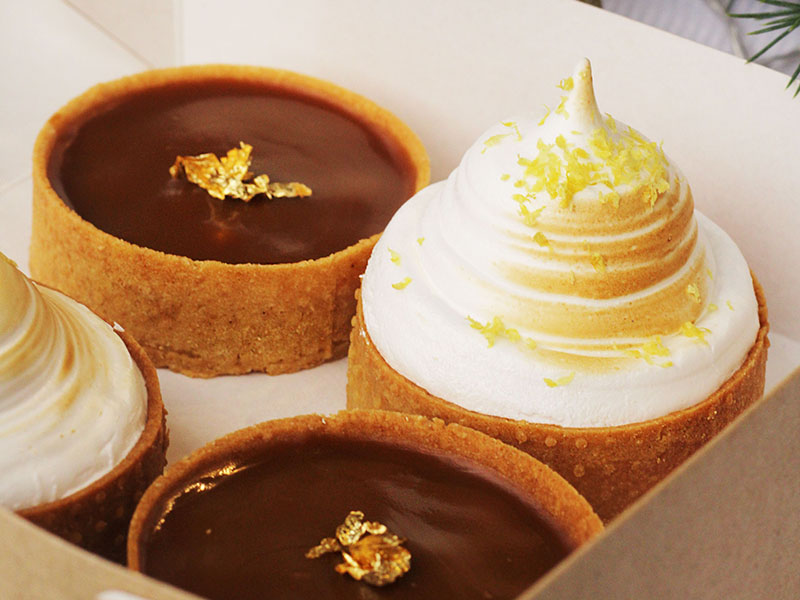
Bought as a raw ingredient, edible gold is not terribly expensive. A jar of about 30 mg — roughly three servings — costs about $20. However, gold-flaked dishes ordered at restaurants tend to fetch top dollar. A Tokyo sushi restaurant offers a roll filled with various fish and wrapped in gold leaf for $96. The Golden Tomahawk at the restaurant Salt Bae on the Spanish island of Ibiza caused quite a stir, according to a feature in Esquire magazine, when a diner was charged $1,000 per steak and promptly called the police. For a much smaller buy-in, those with a curiosity for this fabulous topping can find gold-leaf-flaked ice cream across California for less than $15.
Though it bears no real nutritional value or flavor benefits, edible gold can create an air of elegance, opulence and glamour around any dish. Flecked atop a cocktail, tossed into a bowl of pasta or wrapped around the swirl of a soft-serve cone, edible gold is Au-ll the rage.