
Ulker Batoor didn’t know she was immigrating to the United States. Like so many stages of her life, there was little opportunity for her to plan what came next.
Her earliest memory is from when she was about 4 years old, in the northern Afghan province of Jowzjan. Her family is gathered on the floor of their mud-brick home making mantu, dumplings filled with ground beef, onion and plenty of black pepper. The dough is rolled flat, cut into squares, filled and then steamed. Ulker wants to help. Mostly though, she wants to eat the dough.
“My sisters would tell me to get out of there,” she recalls. “I would make more of a mess and nobody would encourage me or show me how to do it.”
Six years later Ulker still had virtually no cooking skills, but feeding the family had become her responsibility. It was then, in 1996, that the Taliban seized Kabul, the capital of Afghanistan, and continued pushing north toward Jowzjan. Ulker’s father had been politically active before the group’s rise to power and feared he would become a target. The family believed that if the Taliban had found him, they would have killed him; a threat that was far from abstract, as Ulker remembers seeing the bodies of people from her own neighborhood who had been publicly executed. Her father fled.
And then there was Ulker’s mother, who was left to earn money for the family. Around the same time, her own father – Ulker’s grandfather – became ill in Pakistan, and she too left Afghanistan, to care for him. What was expected to be a short absence ultimately lasted a full year, leaving three young children at home on their own, and 10-year-old Ulker became the caretaker of her 14- and 8-year-old brothers.
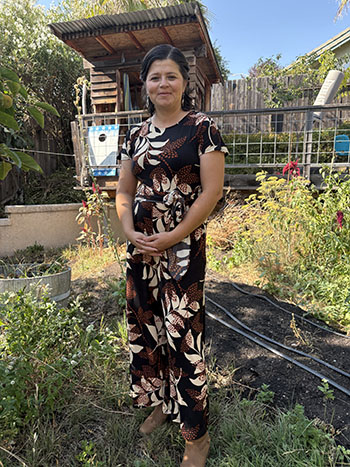
“I learned to become a mom very quick because both my brothers struggled with our parents being gone. I had to become the adult to let them know that I’m here and I’m protecting them.”
With schools closed to girls under the Taliban, Ulker, still a child, learned to weave carpets to earn money and to cook with whatever she could find. Often, there was very little. For long stretches, the three children ate boiled rice, or if they were lucky, there were potatoes. Neighbors who knew they were alone sometimes brought over leftovers.
The shortages in their kitchen were part of a much larger crisis. Dr. Mejgan Massoumi, Assistant Professor in Carnegie Mellon University’s Department of History and whose research examines Afghanistan’s cultural and political history, describes the period as “dire for women, and for food.” Drought, war and the destruction of agricultural infrastructure were constricting Afghanistan’s food supply.
“The food was more survival level,” Ulker remembers. “I still have that feeling in me, because when I have a plate of food in front of me, I do not know how to enjoy it more than shove it [down], thinking somebody is going to take it away from me.”
That instinct has stayed with her, though she is trying not to pass that reflex on to her children who she shares with her husband, Kyle. Today the family lives in San Luis Obispo county, thousands of miles from the place where Ulker spent her childhood. At their dinner table she is often asking them to slow down, to talk and to taste what is in front of them; she wants them to experience food as something to enjoy, rather than something they might lose.
Ulker asks me if I’ve seen the YouTube shorts about ‘struggle meals.’ I have not.
The premise is familiar to her: Open the cupboards, take stock of what is there and make a meal because buying anything more isn’t an option. She tells me she can go down a rabbit hole watching the videos.
They remind her of her life in Jowzjan, when there was little more than rice and oil in the house. Grains were expensive, and when there was rice, they usually bought the short-grain variety, the kind that cooked down soft and sticky. Ulker tried to bring variety to the monotony of the same ingredients day after day, willing the food to taste a little different—she might slowly caramelize an onion in beef lard, add rice and water, then let it simmer until it becomes creamy. If there was cilantro or chives in the garden, she could add those.
She kept a garden of tomatoes, cucumbers, mint, dill and chives just outside the house, all kept alive with water from a well in the middle of the yard. She has vivid memories of the act of lowering a bucket tied to rope some 60 feet into the ground, filling it with water then using her muscle to pull it back up. Even now, the smell of fresh mint or dill can take her back to that backyard and those memories.
Growing up among Uzbek, Pashtun, Hazara and other Afghan communities, Ulker ate in friends’ homes and learned their foods. When there was little to eat at her own house, she sometimes timed those visits intentionally, arriving around mealtime.
Dr. Massoumi points to a saying across the Persianate world: nān-o piyāz wa pishānī bāz, roughly, ‘bread and onion, with an open face.’ Even when a household has little to offer, a guest is welcomed with what is available. “Hospitality wasn’t something offered only when families could afford it,” she says. “It actually mattered more when they couldn’t, or when there was scarcity.” Sharing food, she explains, creates bonds of friendship, loyalty and respect. At minimum, a guest might be offered tea. If there was more to spare, perhaps dried fruit or nuts.
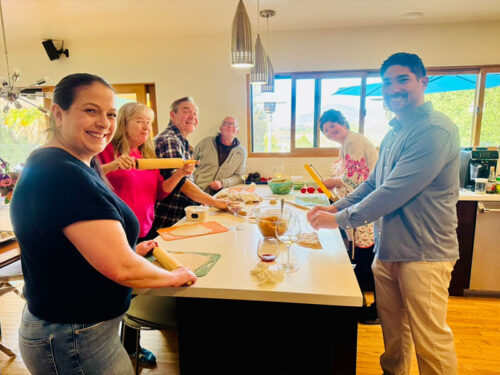
Through a turn of events, Ulker was invited at 16 to live in Kabul with the Akbar family, longtime friends of her father, where she could resume her education. The capital city was beginning to rebuild after years of war. Afghans returning from Pakistan, Iran and elsewhere brought culinary influences acquired abroad, and along with it came new opportunities and an influx of international visitors. Public food stalls proliferated, selling kabob, bolani, sheer yakh and shor-nakhut, a savory mixture of chickpeas, chutney and vinegar—Dr. Massoumi says the movement of people back into the country broadened the foods and flavors circulating in the capital.
And in the Akbar household, education was central. Kaka Akbar, the family patriarch, was a writer and involved in politics. His daughters were educated and already making their way through an increasingly international Kabul; one worked for BBC World at 14 years old, another for the New Zealand embassy. Their home regularly drew journalists and visitors from abroad: “There were a lot of journalists,” Ulker remembers. “Everyone wanted to cover Afghanistan.”
Though Ulker spoke very little English, she found another way to communicate with the house guests. “When I wanted to please them, I would cook for them,” she says. She made ashak often, dumplings filled with herbs and topped with garlicky yogurt, lentils and mint. Cooking, once something Ulker had done only to keep herself and her brothers fed, was becoming her way of connecting with other people, and here their response was different. People thanked her. They enjoyed what she made! It developed into something she could take pleasure in.
This pleasure especially registered at the market, where in the summertime, there was okra. Eggplant. Tomatoes. Basil. Fresh herbs. Winter required more planning, with foods preserved for colder months, like torshi, vegetables pickled in brine. She had grown up with a relatively small collection of spices: turmeric, coriander, cliantro and cardamom, and Kabul expanded that pantry. Here she was introduced to curry leaves, curry powder and garam masala, then began experimenting with them herself; this was where “spice came into my life,” Ulker recalls, fondly.
“My favorite time was always summer. I would make an eggplant with tomatoes and herbs dish, with rice next to it, and it would all come together. Oh and the okra would fry quickly. I’d make okra with onion and garlic.”
Ulker also took over much of the household grocery shopping, returning from the markets with vegetables and figuring out what to make with them. She began to understand how acidity, heat and seasoning could transform whatever ingredients were available. The Akbar daughters preferred rice, she remembers, but once Ulker began cooking vegetables, those were often the first dishes to disappear.
“I learned to play with these spices and herbs and they become like a bundle in harmony together. That was something I didn’t learn overnight. Like citrus, for example, can go very well with certain herbs. Sometimes you don’t have a citrus, and then what you can use to get that citrus effect is vinegar, because everyone has some kind of vinegar. Stuff like that. So that was learned over time.”
She watched how others cooked, particularly friends whose food traditions relied heavily on heat. Chiles were used fresh, dried and ground into powder; one friend spread butter across fresh bread and dusted it with chile powder. Ulker began borrowing from what she tasted around her and adjusting combinations to suit her own palate. It was in Kabul that she discovered cooking belonged to her.
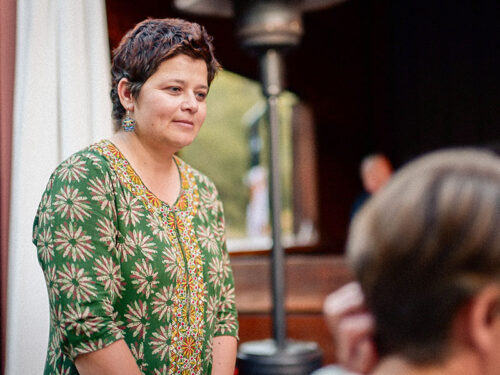
An opportunity to continue her education would take Ulker much farther from home. While living in the capital, she was connected with a group based in San Luis Obispo willing to sponsor her move to the United States. Within a month of that offer, she secured her passport, and three months later she was in California.
When she arrived in 2005, she immediately recognized how much catching up she had to do. She enrolled in remedial courses while improving her English, and then moved from Cuesta College to Cal Poly, where she pursued agriculture-related studies alongside a food minor.
But one of her first lessons in American food came at the grocery store. “It felt like a kid walking into Disneyland for the first time,” she remembers, laughing. Everything was “bright, big, shiny and colorful,” including rows of apples that appeared almost impossibly perfect, but when she took a bite of one “it tasted like cardboard. It was watery, with very little sweetness.”
Farmers markets came to the rescue, and lucky for Ulker, San Luis Obispo was home to multiple markets that had an abundance of fresh produce year-round. The apples might be smaller or crooked, their skins marked rather than polished, but they tasted the way she expected an apple to taste; they were crisp, sweet and full of flavor.
At Cal Poly, Ulker took a fruit science class and learned to graft apple trees. She planted three of her own. Three eventually became more than 40, growing alongside a seasonal vegetable garden. It was also at Cal Poly where she organized potlucks that brought the university’s international student groups to the same table, each sharing foods from home, a gesture that made her feel a little less far from her own.
She had come to the US with only a small duffle bag of belongings, but what she carried with her was that instinct to do with what was available. To grow something when she could. To preserve when there was plenty. And to taste other people’s foods and fold that into her life.
As a child, Ulker gardened alongside her father, who showed her how to put seeds into the ground and then return to see how much they had grown. “That excitement, oh my god,” she remembers. “That was always part of me.” Even during the hardest years, “I grew whatever I could in my gardens.” She kept growing in California.
Today, it is also her work. Through Toro Creek Ag Services, the agricultural consulting and farming business she co-founded with Kyle, the two work with local growers and homeowners, from establishing backyard gardens to managing orchards and other agricultural operations.
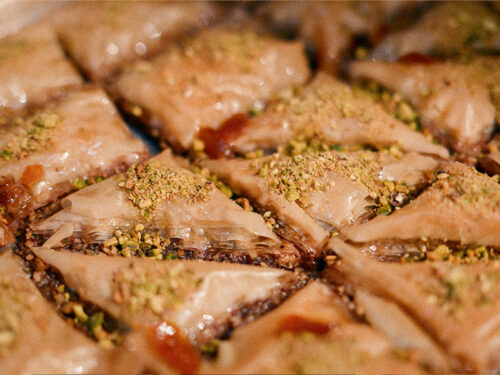
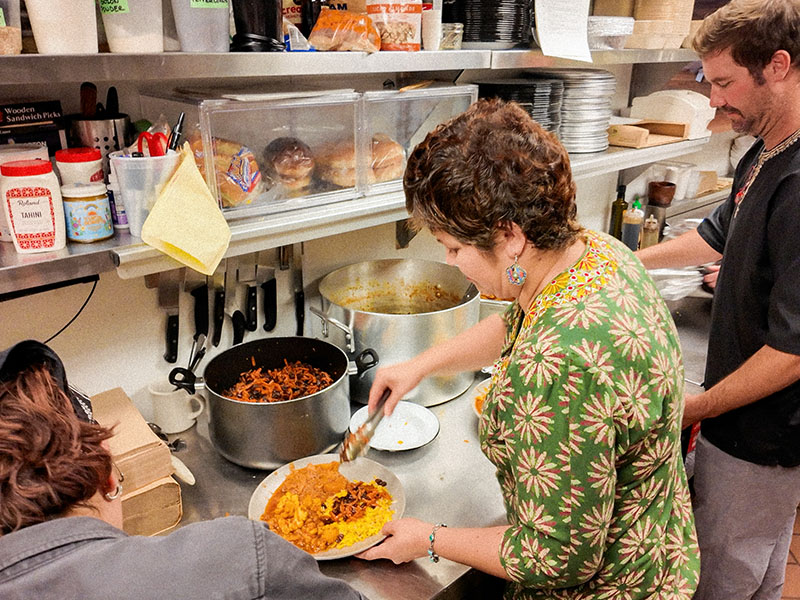
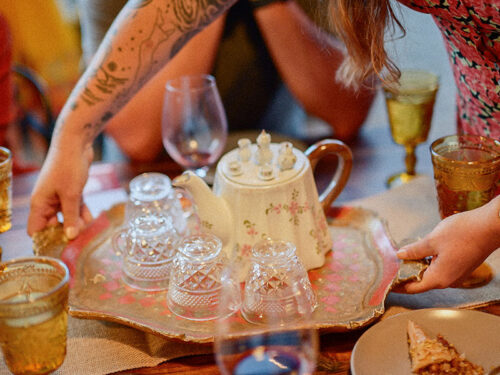
Her food has found its way to other tables, too. At the Edible Magazine ‘Use My Kitchen, Tell Your Story’ dinner at Halfway Station, Ulker prepared a generous spread of chicken korma, saffron palaw mixed with the sweetness of carrots and raisins, Afghan salata, baklava fragrant with rose water, saffron and cardamom. The evening ended with chai, green tea steeped with cardamom and rose water, brought to each table for guests to pour for one another. It was a small gesture, but one Ulker had known since childhood: You offer what you have, and you share it.
Among the guests that evening was Jenny Durling, who arrived knowing neither Ulker nor much about Afghan cuisine. That experience prompted a second, more intimate gathering. She was inspired to invite Ulker into her home to cook for three couples, an evening that began with the two women gathering tomatoes and fresh herbs from Jenny’s garden before preparing the meal together. Ulker shared her recipes and stories, and Durling later worked with her to document the dishes for her guests. “After the fabulous dinner and taking in the whole experience, I wanted to share it with friends,” Durling recalls.
The exchange has continued well behind that evening. Durling now regularly prepares a variation of Ulker’s salad dressing, with the unexpected addition of pomegranate syrup. When three childhood friends recently visited her at home, they found themselves picking tomatoes from the same garden, prompting Durling to recount her introduction to Afghan cuisine and the dishes she had since learned to prepare. Friends requested the recipe, extending its reach into kitchens Ulker herself has never entered.
These days, Ulker makes ashak, korma, shir berinj and more with her children, her hands moving through motions she first watched as a little girl on the floor of her family’s home. She hesitates to describe what she cooks simply as “Afghan food.” It is, she says, “my cooking.” Her kids understand the distinction. When she takes them to Afghan restaurants, she says, they immediately tell her, “That’s not Mommy’s food.”
Her food begins with what grows around her. She tends a garden at her Central California home and brings what it produces into her kitchen, alongside spices she buys, roasts and blends herself. She preserves what is plentiful and continues to adjust the dishes she grew up eating. A second refrigerator in the garage is crowded with jars of vegetables in various stages of pickling and fermentation; when guests visit, they rarely leave empty-handed. I have been one of those lucky ones.
The simple salata of her childhood made with tomatoes, cucumbers, onion and herbs, for instance, now gets fresh lime juice and olive oil, additions picked up over a lifetime of cooking. The little girl who hovered nearby trying to steal bits of mantu dough is now showing her own children how food is made.
Her youngest is just a few months shy of the age Ulker was when her parents left, when feeding her brothers became her responsibility. Now they cook together, and small hands reach for a piece of dough before Ulker is finished. Ulker knows the move.
Shir Berinj
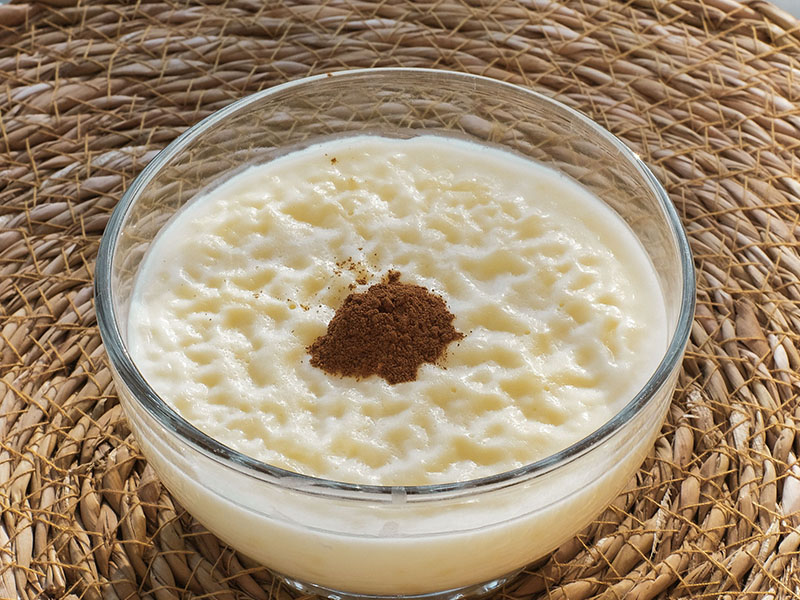
Recipe provided by Ulker Batoor
One of my favorite sweet dishes is shir berinj, an Afghan rice pudding. Short-grain rice is cooked with whole milk, butter, sugar and cardamom until it becomes soft, thick and creamy. Sometimes I add slivered almonds or pistachios.
Ingredients
Instructions
-
Rinse rice and cook slowly with milk, stirring occasionally, until rice is very soft and creamy. Add butter, sugar and cardamom. Continue cooking until pudding thickens.
-
Serve warm or chilled, topped with almonds or pistachios if you’d like.