
Nestled among exotic silks and dried spices from eastern Asia, jujube fruit made its way by camel along the Silk Road to ports on the Mediterranean and by boat to points farther west. As far back as the second and third century BCE, this unassuming gem has been considered one of the five most nutritious fruits. The Roman historian Pliny the Elder recorded jujube fruits in the first century CE.
But jujubes aren’t a dusty relic of the past. They are a superfood of the present.
The original gumdrop candy recipe featured jujube fruit, but don’t mistake these delicious fruits for the brightly colored candy you might remember from movie theaters. In the 19th century, that recipe was changed to use artificial flavoring instead. Jujube candy is no longer produced by the Ferrara Candy Co. But real jujube fruit is still grown and widely available.
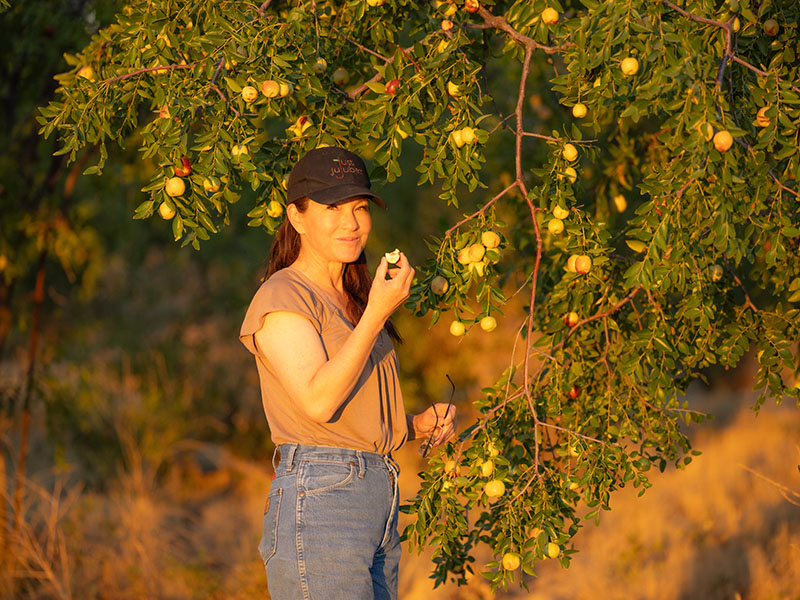
 Just Jujubes Farmer and Founder Alisha Taff describes jujubes as if “a not-too-sweet date and a fig and an apricot had a love child.” She grows jujubes on her farm on Rock Front Ranch in Santa Maria, off Highway 166. The ranch is in the Cuyama Valley, at the intersection of four counties: Santa Barbara, Kern, Ventura and San Luis Obispo.
When she bought the property with her former husband and daughter in 2003, Alisha had no experience in agriculture — just grit, determination and intuition. They ran cattle and trained horses. Then, in 2012, drought came. They cut back on the number of cattle and pondered what else they could grow with their limited water supply. They planted a test orchard with peaches, plums, mulberries, apricots, pears and jujubes. Of all the fruits, the jujubes thrived.
“As a child in an Asian American household, I remember visiting my mother’s Chinese friends, who always loved to spoil children and give out jujubes,” Alisha recalls. “Just sweet enough, it was candy in my eyes! However, at the time, I had no appreciation for its high nutritional value and that it played an important role in traditional Chinese medicine.”
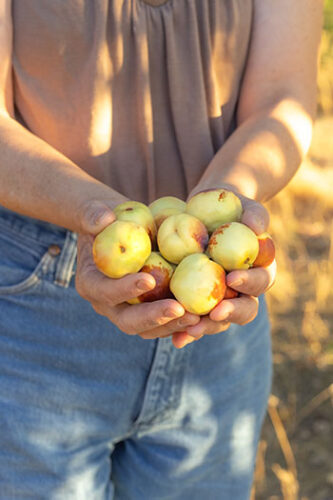
Rich in vitamin C, amino acids and antioxidants, jujubes are also high in fiber and contain protein. Fresh, they have the crisp, slightly tart bite of an apple; dried, they take on a caramelly, chewy sweetness. Like peaches, plums and cherries, jujubes are edible drupes with a fleshy or fibrous exterior surrounding a woody pit or stone that encases the seed. They can be eaten fresh or dried. The dried fruit has many applications in medicine and culinary science. It is used in teas, smoothies, chutneys and desserts and is believed to aid sleep, digestion and immunity, soothe sore throats and ease coughs.
The resilient plants were a perfect energy source for nomadic tribes and travelers on cross-continental caravans along the Silk Road. They are equally valuable on charcuterie boards, in desserts or for guiltless snacking.
They grow on a small, deciduous tree or shrub (16 to 33 feet tall) with thorny branches. This variety is both drought-tolerant and frost-resistant, making it ideal for San Luis Obispo County. The fruit is walnut- to small-plum-sized, and red and wrinkly when dried. Alisha dries them on the trees at her Rock Front Ranch.
“It’s a lot more labor intensive, but if I let Mother Nature do all that work [rather than drying them artificially], it’s then still a raw food,” she explains. Alisha farms with help from a loyal group of workers who pitch in for pruning, weeding and harvesting. Harvest is mid-August through October, depending on the varietal, and is quick — about 10 days. Alisha says fresh, organic Just Jujubes become available starting the second week of September.
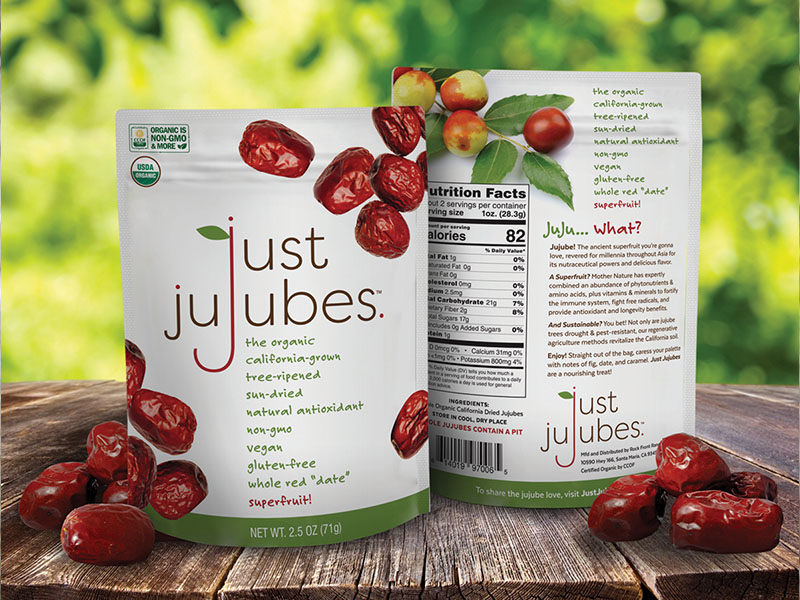 Like berries and citrus, jujubes don’t ripen after picking, so you need to know in advance how you want to enjoy them. If you want crunch like an apple, pick when they are shiny, golden-brown to reddish-orange. If picked early at the green stage, they have no real flavor at all. For a soft, chewy, sweeter, date-like fruit, you have a choice: If the tree is in your backyard, you can leave hanging until they begin to wrinkle and dry. Otherwise, select ripe fruit and dry in a dehydrator or oven. Or buy from a grower like Rock Front Ranch.
Try the dried fruit in chutney, gorp or tea. For tea, simmer with fresh ginger and an optional cinnamon stick, in water for one to two hours. Mash up the jujube dates and strain before enjoying. Adventurous types can make a unique dessert for their next dinner party: Try a jujube cake, or cream cheese–stuffed jujubes as an appetizer. The dried fruits can be substituted in any recipe that uses standard dates.
One doesn’t have to endure a dusty camel ride on the Silk Road or live in ancient Rome to enjoy these delicious treats. Here in SLO County, they might be right in your neighborhood at the farmers market or grocery store.
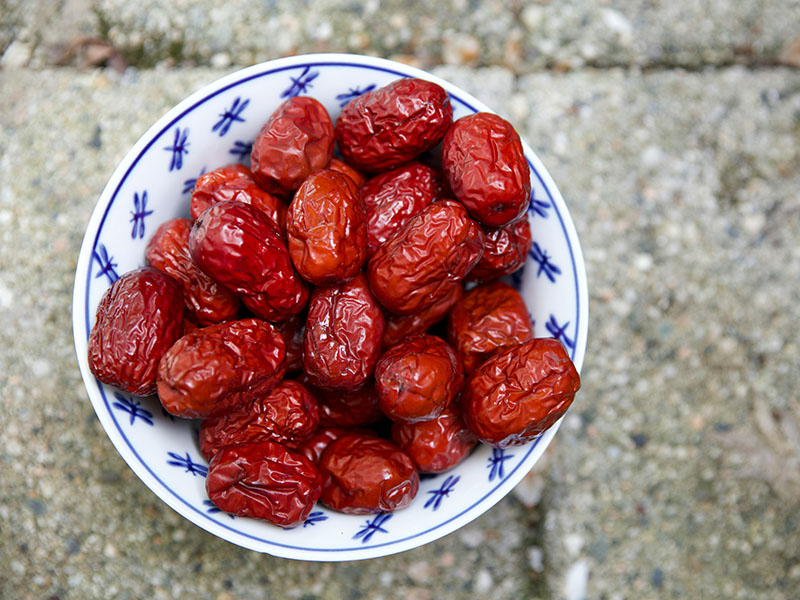
Dried Jujubes Stuffed with Citrus Cheese and Nuts
Ingredients
Instructions
-
In small pan, toast walnut pieces in olive oil and sprinkle with Himalayan salt. Set aside to cool. Place Just Jujubes on a dish. In medium bowl, mix cream cheese, orange juice, orange and lemon zest and sugar until soft. Taste and amend to your liking. Place in piping bag or a small zip-top bag. Cut corner of bag to squeeze into jujubes. Gently fill each jujube with mixture. Insert a piece of toasted walnut into center of mixture of each fruit.