

Bistronomics: The Cost of Doing Business in SLO County
Story by Linda Reed
Photography by Jayme Burrows
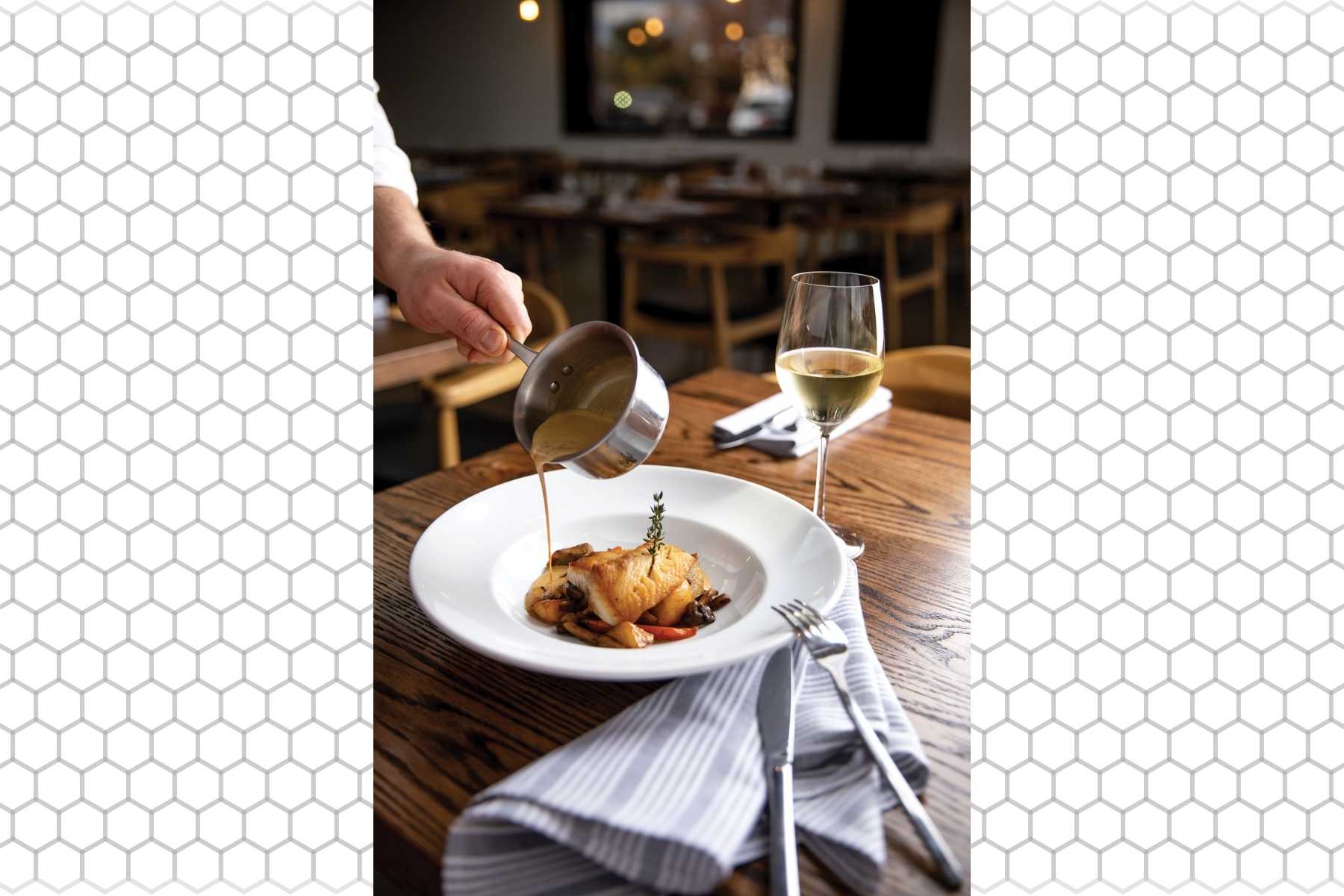
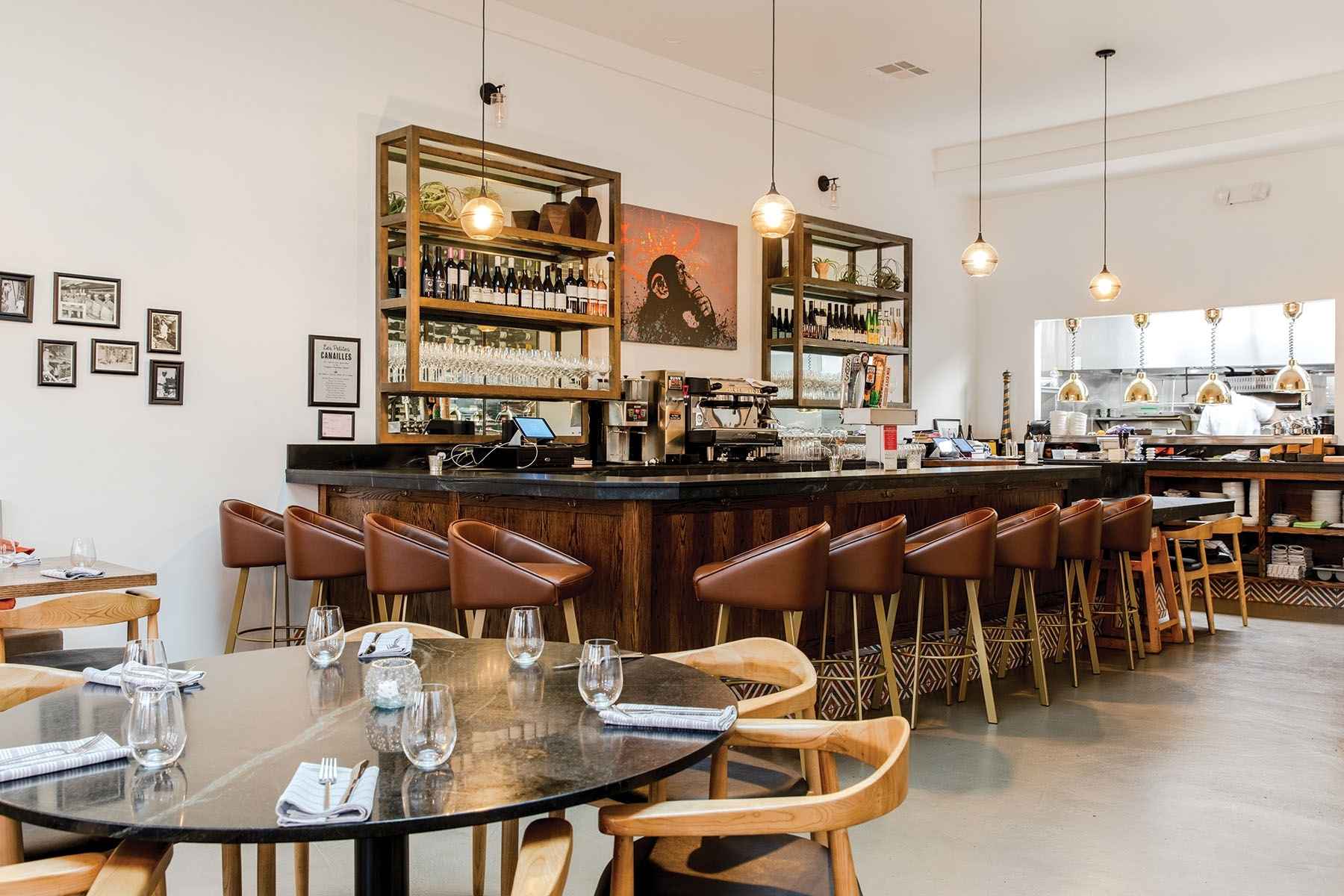
Under moody lighting, with a view of the open kitchen, a plate of steak tartare adorned with a radiant confit egg yolk is delivered to the table. This French dish of freshly minced raw beef is a star on the menu of Les Petites Canailles in downtown Paso Robles. Priced at $26, it’s the kind of appetizer one might reserve for a special night out. But that doesn’t mean Owner Julien Asseo is cashing in on this dish — or any, for that matter.
“I think our guests don’t always realize what goes into operating a restaurant,” says Julien, whose other hat is a toque blanche. “And so, I hope they can appreciate the fact that we try our best to be fair and not price anything more than we need to cover our cost of operation and keep the business afloat.”
As chef and owner of Les Petites Canailles, Julien has to balance his luxurious culinary visions with the reality of what a customer will pay. Profit margins in restaurants and wineries are slim and many owners never get out of the red. But prices of ingredients — which have surged due to tariffs and supply chains — are just one of many factors in the cost of doing business.


Breaking down the bill
When the bill arrives at the table, the line items on the receipt explain only a fraction of the true cost. What’s called the cost of doing business and pricing strategy details the real expenses baked into the experience of imbibing or dining out.
Julien’s method balances value, fairness, consistency and covering increasing costs to ensure the integrity and viability of his restaurant. His costs include rent, utilities, taxes and insurance — the same things a homeowner or renter needs to include when setting a budget.
In Paso Robles, a Michelin-recommended restaurant like Les Petite Canailles would need to sell over 2,000 entrées annually just to cover rent or lease expenses. That comes out to six diners a day, every day of the year. A more casual dining establishment with a lower average menu item might need to sell 4,386 burgers, or 12 per night.
Add to that the wages for the chef, cooks, dishwashers, wait staff and management, which are at least the California minimum wage of $16.50 per hour. “Tariffs have affected our cost, as well as minimum wages going up, added employment regulations and taxes,” Julien explains.
And there’s no meal without ingredients. Food must be procured from approved and regulated suppliers and stored in health-code-mandated, temperature-controlled equipment. As shipping costs increase with distance, Les Petites Canailles strives to use and support local producers, farmers and fishermen — even if the products, themselves, are more expensive.
On to the drinks. In pricing a glass of wine, the rule of thumb in the industry is the restaurant sells a glass for the same price it paid for the bottle at wholesale. So, you paid $15 for a glass from the bottle that cost the restaurant $15. That’s because an opened bottle of wine needs to be consumed within 24 hours. If a new bottle of wine is opened to pour in your glass but no other guests order that wine, the restaurant has at least covered its own cost.
Expense strategies
Once all these expenses are tallied up, the owner needs to decide on a market strategy. There are four standard approaches, with many variations. Cost-plus pricing adds up all the costs listed earlier and tacks on the desired profit margin. This is the easiest method, but it doesn’t consider the stature of restaurant or its location.
A second approach is market-based pricing, which factors in what customers are willing to spend based on what others in the area are charging for comparable dishes. This method adjusts upward for popularity, audience or location and keeps the restaurant in line with competitors.
Customer perception takes into consideration the value customers expect to receive for the price they pay. Higher-quality surroundings and ingredients justify higher prices. A restaurant in a vibrant downtown area may be able to charge more than one on the outskirts. A good reputation will allow higher prices using the principle of supply versus demand, where the desire for a limited supply of in-demand seating in a restaurant increases prices.
Finally, there is the market positioning strategy, a combination of market-based pricing and customer perception. This involves the concept of brand, target markets and the overall experience the customer expects. A fast-food joint like McDonald’s doesn’t offer the same ambience and experience as a fine-dining establishment like Les Petite Canailles. Do you want to eat your meal in the front seat of a car or inside a well-appointed eatery? Interior design, quality of service ware (plastic forks say a lot) and the experience of the staff all factor in.
It adds up quickly. And prices need to be reevaluated regularly to keep up with changes in law, taxes, ingredient prices and employment costs. “We generally increase our pricing once a year to keep up with inflation and other increases in supplies, taxes, etc., but it’s usually minimal,” says Julien.
One could cook the same dish at home, assuming all the ingredients, skill and time to create a gourmet meal or available. And it would probably cost far less than a restaurant would charge. But a truly fair comparison would have to include a portion of your rent or mortgage, utilities and equipment costs.
An evolution in wine tasting
Wine sampling has morphed into wine tasting over the years. Rather than exploring whether the winemaker’s palate meshes with yours, now it’s all about the experience of tasting. This has led to an increase in tasting fees.
Wineries that charge a tasting fee would argue that it’s needed to cover some of the cost of pouring hundreds of bottles of wine a year for tastings. As with restaurants, an open bottle of wine is on a timer. At $50 or $60 per bottle, it adds up. Special experiences like personalized tours, vintage wines and private tastings add value but usually have an additional charge.
Another big factor in tasting fees is customer perception. Wine consumers have adapted to paying for a tasting to the point that a low fee could create the impression that the wine isn’t good. A very high fee can result in customers feeling “ripped off.” There’s a term for that assessment: price-quality heuristics, where consumers use price as a shortcut to judge quality.
Paige Wilson, Co-owner of Concur Wines, a woman-owned winery in Tin City, uses the Market Positioning Strategy. “When setting our tasting fees, I definitely did some benchmarking and just looked around, especially in Tin City, where we are,” she explains.

The wineries in Tin City charge a fee and Concur keeps its fees among the lowest. For Paige and Co-owner and Winemaker Natasha Boffman, the most important thing is “making sure people are understanding the wines, they’re understanding our story and where we’re coming from as a family-owned and -operated winery. Tasting fees keep us on par with other wineries, and yet we have flexibility over when to waive them.”
Eberle Winery on Highway 46 in Paso Robles is an exception. “As long as I’m alive, this winery will never charge for tasting,” says Gary Eberle, Owner and former winemaker. “It’s no secret we don’t charge. And I didn’t invent it. This was one of the things I learned from Mr. [Robert] Mondavi. He didn’t tell me a damn thing about making wine. But he taught me a whole lot about selling wine. You’ve got to have a good product, and you’ve got to have great hospitality, and you’ll sell wine. That has worked for us.”
Eberle’s success without fees sounds like a unicorn situation, but it is really due to the reputation and longevity of the winery’s presence in the Paso market. These factors overcome the price-quality heuristic. Gary knows they have a quality product and provide a customer-focused experience, which leads to selling a lot of wine. Missing out on tasting fees is just baked into the cost of doing business.
Whether it’s an entrée at a restaurant or a tasting at a winery, the unpleasant fact is that prices increase over time. Few in the industry end up getting rich. Most do what they do simply because they love serving people, making exceptional food and creating memorable experiences.