
Edible Flashback: Seaweed, the new Chanterelle?
Story by Jensen Lorenzen
Photography by Dan Kuras
As we countdown to our 50th issue, we take a look back at Jensen Lorenzen’s piece on the power of seaweed from Issue 26. Be sure to check out the dashi broth recipe below.
I needed to leave, to get back to “real-life.” I still had a pile of emails to get through that evening, but as the sun set deeper over the horizon, I felt my desire to return to my computer diminishing in sync with each ray as it extinguished itself into the Pacific.
I tried to step away from the shoreline, but as I moved, my feet sank deeper and deeper into the wet sand. I decided to yield to the liquefaction just as a tangle of ocean flora surrounded my ankles. It was like the ocean, sand and sea plants were conspiring to keep me there. “Why are you leaving?” the tidal environment seemed to be saying. “Stay here and I will teach you more.”
Seaweed As A Consumable
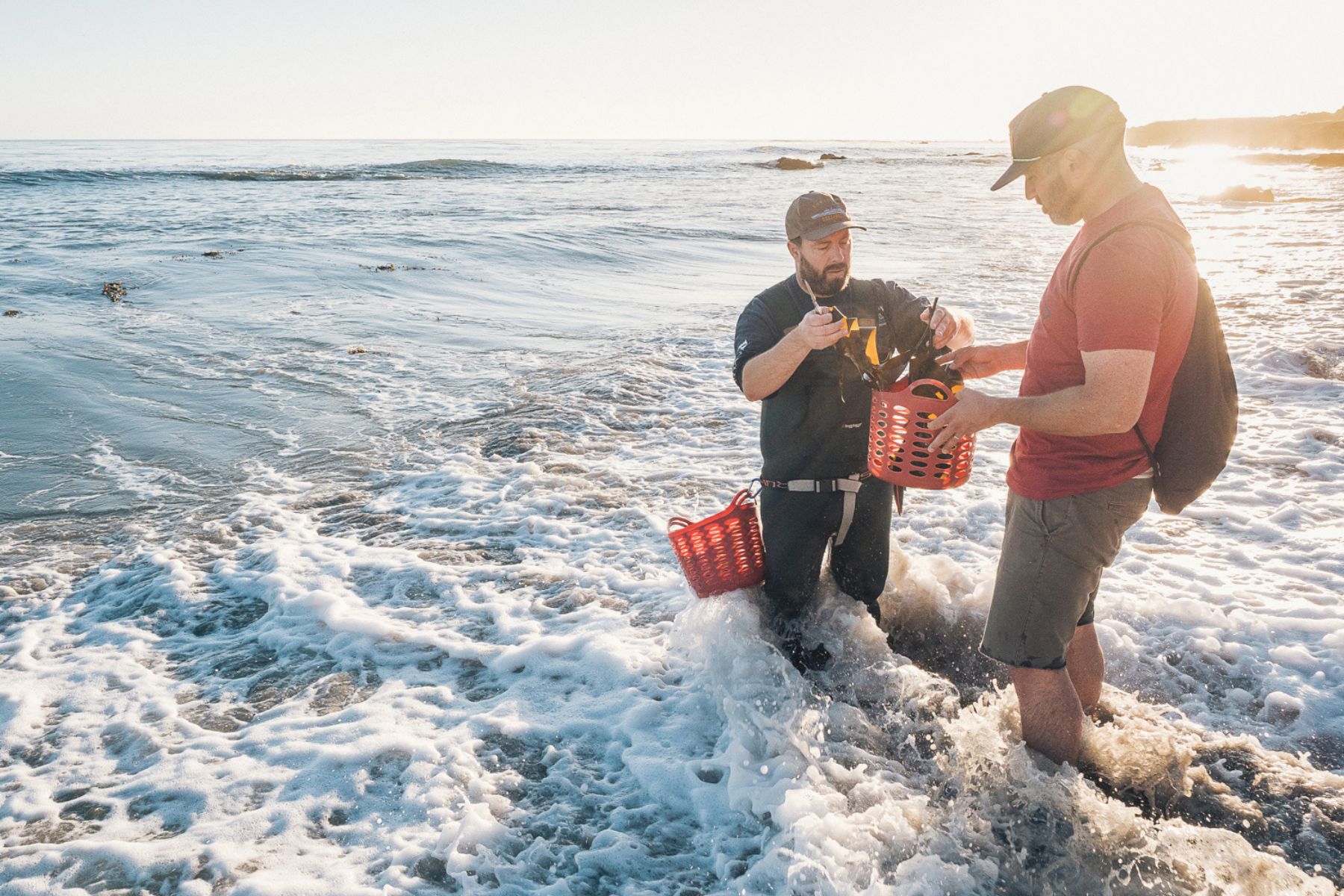
“Seaweed is more nutritionally dense than any cultivated plants and none of it is toxic,” explains Spencer Marley, proprietor of Marley Family Seaweeds. “You might eventually get a little itchy from the iodine, but you can survive on it if you needed to.” Spencer leads regular seaweed foraging excursions along the Central Coast. After learning that I could eat everything growing on the rocks around me, my immediate thought was, “Add all seaweed varietals” to my internal list of Things That Will Save My Butt If Stranded On a Desert Island.
One look at the freshly harvested kombu, with its rust-colored blades glistening in the glow of the setting sun, I could already taste the smoky oceanic and mineral-rich flavor of my favorite Japanese broth.
Laminaria setchellii, or kombu as it’s called in Japanese cuisines, is one of the most commonly harvested seaweeds in the world. It’s widely used in Japanese cooking as the main ingredient in dashi, the stock most often used in making miso soup, and is critical to the flavor of a proper ramen broth. Kombu, among many other common varietals of edible seaweeds, grows in abundance along our coastline, a fact I discovered embarrassingly late in my culinary career. While harvesting seaweed might be a bit more straightforward than hunting for white truffles, it’s not without its risks.
In addition to being exposed to the elements, a tidal zone can be dangerous. It’s often slippery, featuring hazards such as sharp camouflaged rocks — invisible until you slam your shin on one — and high tide can come in quickly when you’re not paying attention, at times making it impossible to return the way you came. This is exactly why Spencer offers his guided sea foraging trips and recommends doing your research before your first harvest.
Foraging Seaweed
You can book a private seaweed tour with Spencer on the Marley Family Seaweeds company site, or, you can also find him at several of our local farmers’ markets selling a variety of his dried seaweeds. If however, you’re anything like I am, you’ll probably read this and then head directly to the beach. That’s fair enough, but at least allow me to give you a few pointers first.
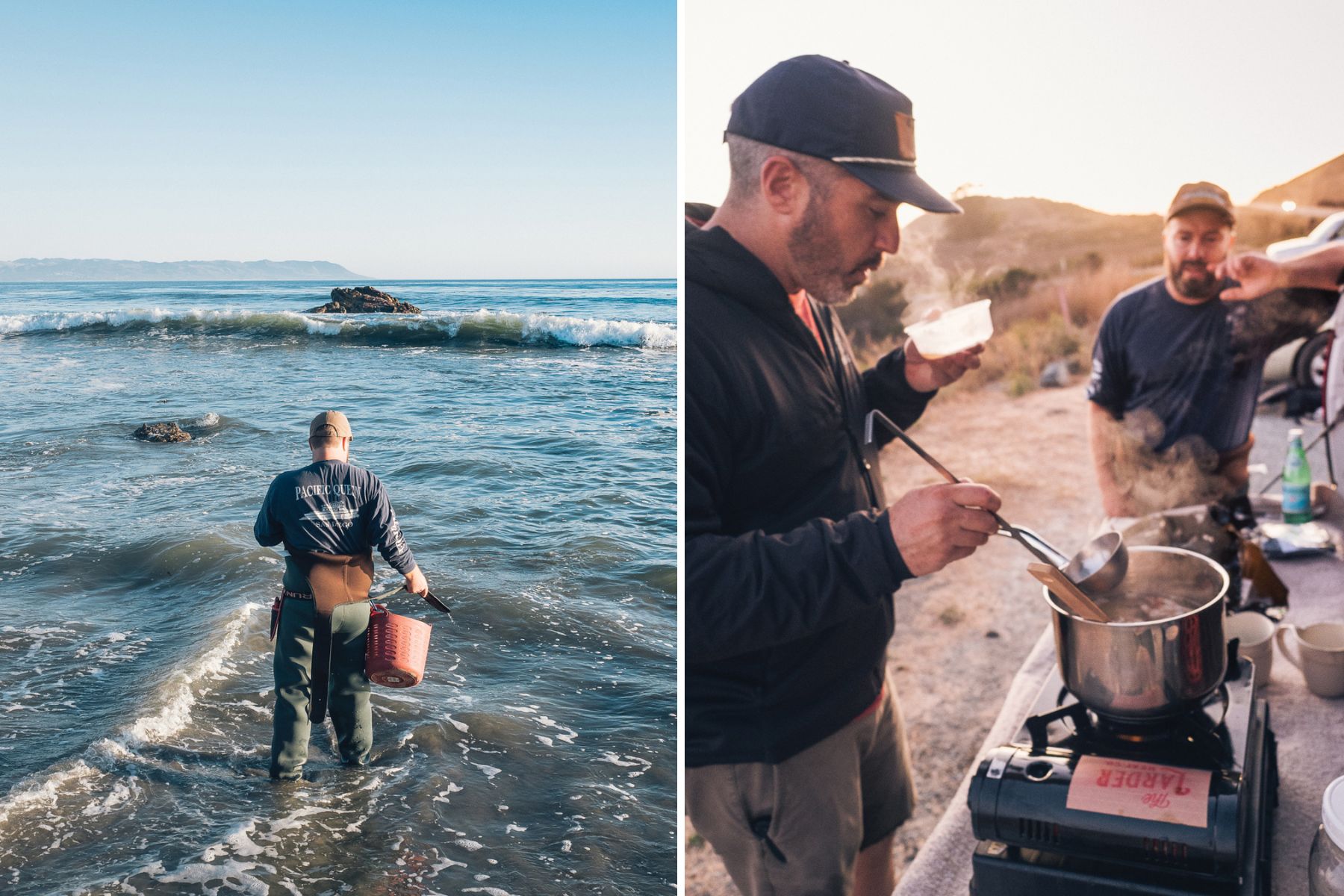
Let’s start with the basic gear list. You’re going to need something for carrying the seaweed, like a five-gallon bucket, a cloth grocery bag or an old backpack. It’s good to use something that will drain so that you collect your limit of seaweed and not seawater. You’ll also want a pair of scissors or sharp gardening shears for trimming seaweed. Fishing gators are great for wading in the water, but a wetsuit or an old pair of jeans are good options for protecting your legs from sharp rocks. Also, you’re going to wear shoes and they’re going to get wet and that’s going to be just fine. They might be soggy, but they’re still the safest and most comfortable option. Trust me, you don’t want to subject your ankles to the abuse they will inevitably endure in a painful attempt at navigating the tide pools in flip-flops. Finally, grab a tide book from your local surf shop or check the tides online for your area. You’re interested in a low-tide excursion time for optimum seaweed exposure.
Now for the fun part. Time to find your “secret spot” and get to harvesting. You don’t have a secret spot? Okay, I’ll share mine with you. It’s halfway between Los Osos and Big Sur, about 20 miles from any building, pier, nuclear power plant or coastal run-off area. Just head to the coast and walk the opposite direction of any people or buildings and you’ll find it.
When you get there, turn your phone off and leave it in your car. Pictures of the secret spot are not allowed and your friends will appreciate sharing a cup of freshly brewed dashi more than they’ll appreciate sharing your story updates. Walk down to the beach, follow the outcropping of rocks into the tide pools and look down. I know, it’s everywhere and it’s all food. You can eat pretty much all of it but look for the stuff you see here, to make it a little more of a challenge.
After you collect a few pounds of kombu, take a moment to look around. Soak in the view, the feeling of the foraging experience, and be grateful that you now have one more reason to turn it all off, tune into your surroundings and connect with nature instead of your devices.
I took the cue and decided the emails could wait. Just then, Spencer pulled up a giant knot of kombu, raised it into the air and exclaimed, “Here we go! That’s the goods right there!”
“What’s the hurry, anyway?” I thought to myself. My email will be waiting for me in the morning, but this perfect blade of kombu might not be, and the opportunity to get to know my new friends a bit more over a fresh cup of dashi overlooking the pacific coastline certainly won’t be.
I just kept thinking, “Why don’t I do this more often?!” I later chuckled to myself at the idea that foraging for seaweed is sort of like hunting, but for vegans.
Cooking with Kombu
Basic Dashi Broth
Serves 4
INGREDIENTS
- 2 8-by-4-inch (approximate) strips of dried or fresh kombu
- 6-8 cups water
- 2 packed cups dried bonito flakes* (or 2 ounces bacon, chopped)
- 1/3 cup high quality soy sauce or tamari
- ¼ cup mirin sweet sake
*Bonito flakes can be found in most Asian markets or specialty grocery stores. Other dried ingredients like mushrooms, ginger, turmeric or chiles can be added to flavor the broth to your liking.
PREPARATION
Step 1
Rinse the kombu under cold water and soak the dried or fresh seaweed in 6 to 8 cups of water overnight in the refrigerator, or for a minimum of 2 hours at room temperature.
Step 2
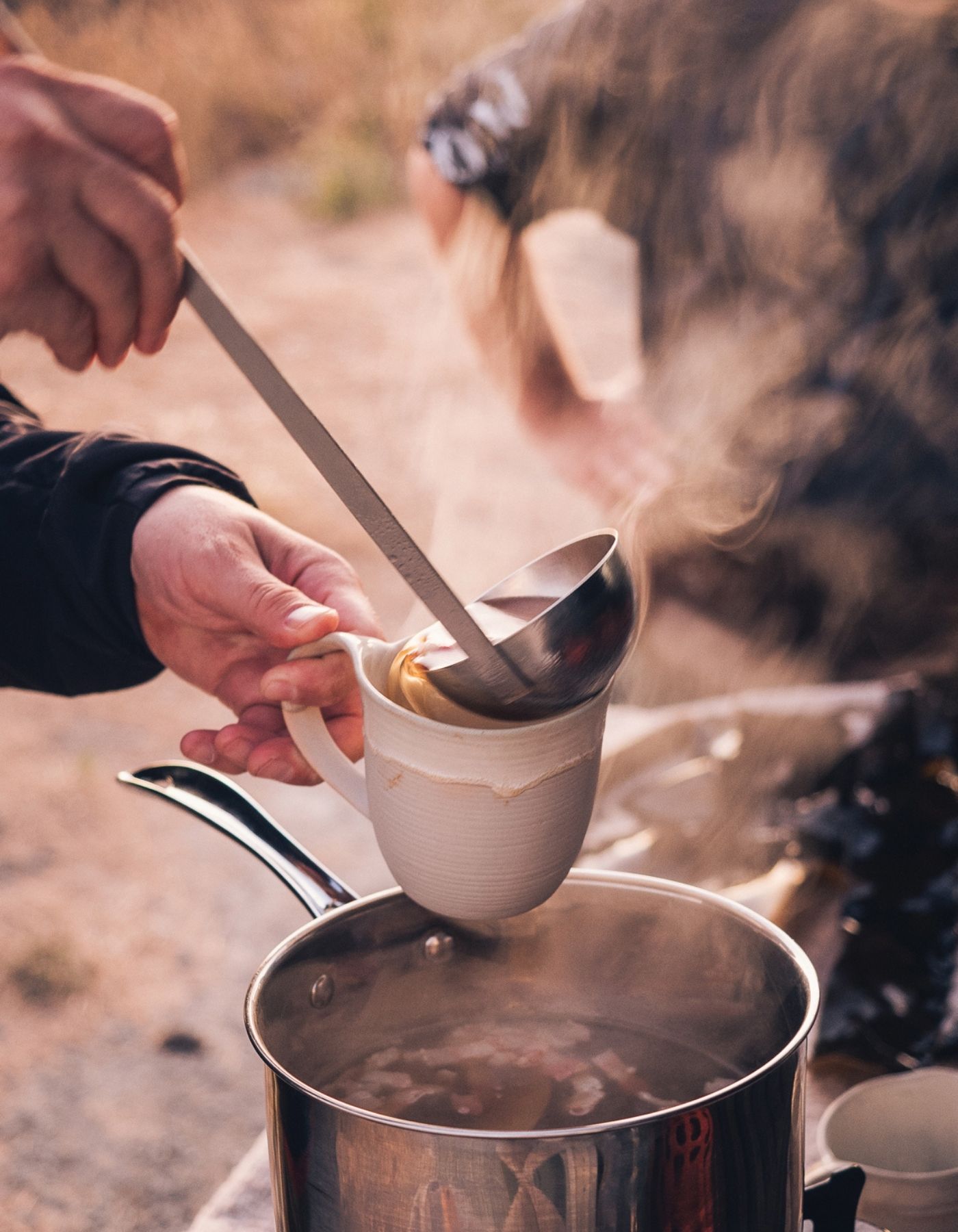
Add the kombu and the 6 to 8 cups of water to a saucepan. Bring to a hard simmer on the stovetop. As soon as the water reaches to just before a boil, turn stove off and add the bonito flakes (or bacon) and allow to steep for 30 minutes. Strain the broth into a mixing bowl to remove the kombu and bonito flakes (or bacon).
Step 3
Whisk in the soy sauce (or tamari) and mirin. Taste the dashi, adding more soy sauce for a saltier flavor, or more mirin for a sweeter broth. The broth is ready to consume.
Note: A good dashi showcases the perfect balance of sweet, savory and funky flavors, a palate experience known as “umami” in Japanese. Other delicious uses for dashi include as the base stock for soups like miso or ramen, or as a savory braising liquid for vegetables and seafood.