
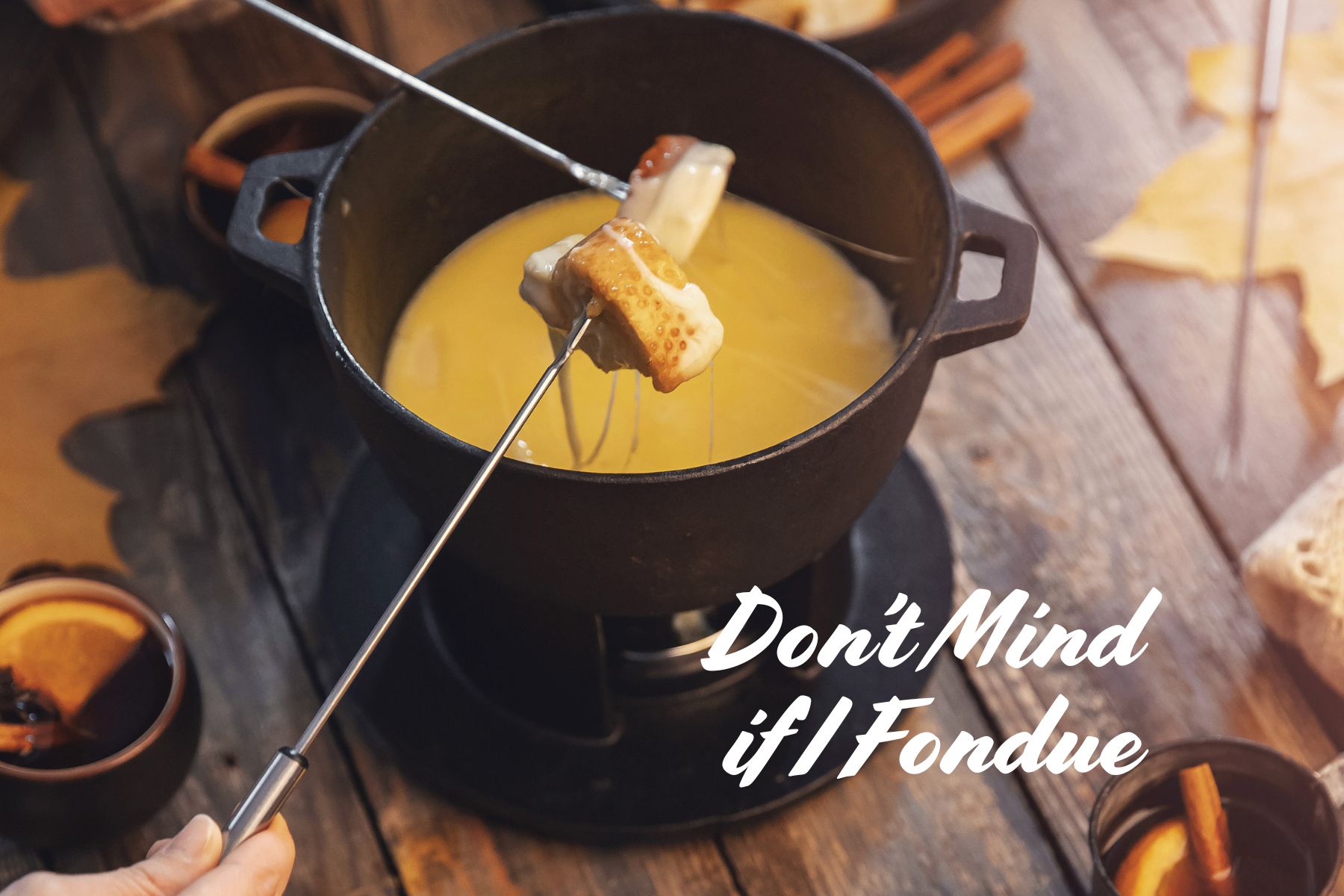
Tasting Spot: Don’t Mind if I Fondue
Words by Lauren Yoon
Is there anything more comforting than gathering around a pot of melted cheese? People have been asking themselves since long before the swanky cocktail parties of the Roaring ’20s or the wedding receptions of modern times.
The first recipe for fondue was published in 1875 in the French and Swiss regions of the Alps, where the dish gained popularity. However, culinary historians believe some combination of cheese melted with wine has existed since nearly 800 BC, the era of Homer’s Iliad.
The late 19th century in the Alps saw the need for fondue develop as aged cheeses and stale bread were the only foods available in winter. It was named a Swiss national dish during the 1930s and became the party staple it’s known as today.
Traditional fondue is a mixture of cheese, wine or brandy and herbs melted slowly over a low flame in a caquelon, or clay pot. Three main types boast different flavor profiles and pairings:
- Classic Swiss uses Gruyère and Emmentaler, kirsch (cherry liqueur) and a crisp, dry white wine such as Sauvignon Blanc, along with some garlic and optional herbs.
- French fondue, namely the Savoyarde variety, is quite similar. It melts Gruyère, Comté and Beaufort cheeses with the same accoutrements as Swiss fondue.
- Italian fondue, or fonduta, uses only one cheese: Fontina. This type utilizes butter, milk and egg yolks instead of the usual wine and herbs.
Each fondue has a perfect pairing. Swiss begs for cubes of crunchy French or rye bread and roasted potatoes. Apples, broccoli, mushrooms and pickles are winners with this variety, as well, and the same goes for French fondue. Both types pair well with cured meats, along with the same crisp, dry white wine used in the base.
Italian fondue differs from Swiss and French because it’s recommended to use whole-wheat bread for dipping. Those with wiggle room in the budget may consider a nice white truffle to sprinkle on top.
Fondue is simple, but the atmosphere it creates is far from it. The self-serve nature of the dish makes it incredibly social. There are even games associated with losing bread in the pot: a riff on Spin-the-Bottle or punishment through the form of a dare (such as doing the dishes or skinny dipping at the end of the night).
The melty cheese-wine concoction celebrates the social creatures we are, as humans, emphasizing our urge to converse over the dinner table. When planning your next gathering of family and friends for the holidays, celebration or birthday, you know what to do: fondue.