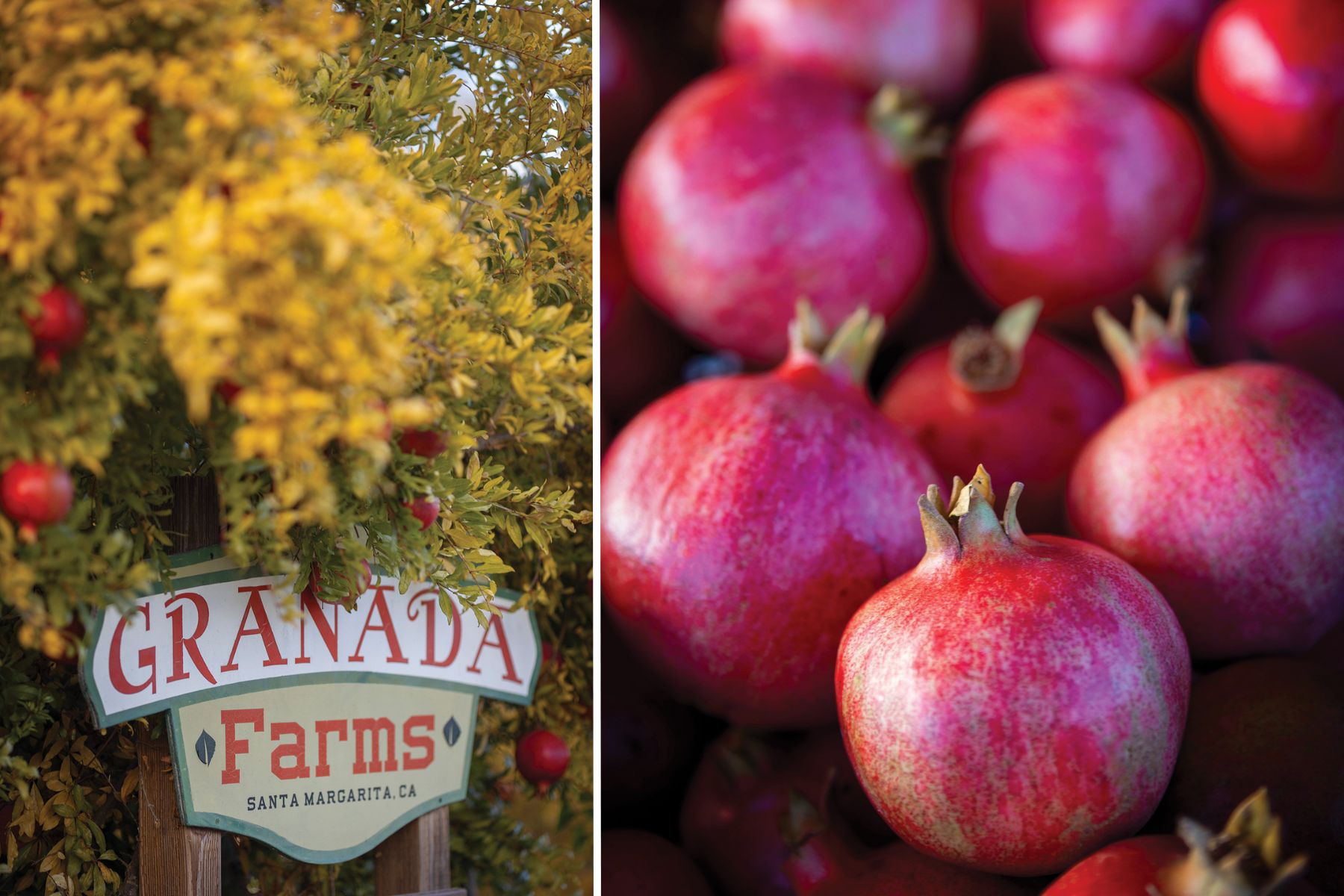
Many Santa Margarita residents remember when — not so long ago — the corner of El Camino Real and Murphy Avenue in downtown Santa Margarita was a vacant, trash-littered lot with sump pits in the grading. Today’s scene bears no resemblance, as that corner is now Granada Farms, a bright and well-cared-for pomegranate farm.
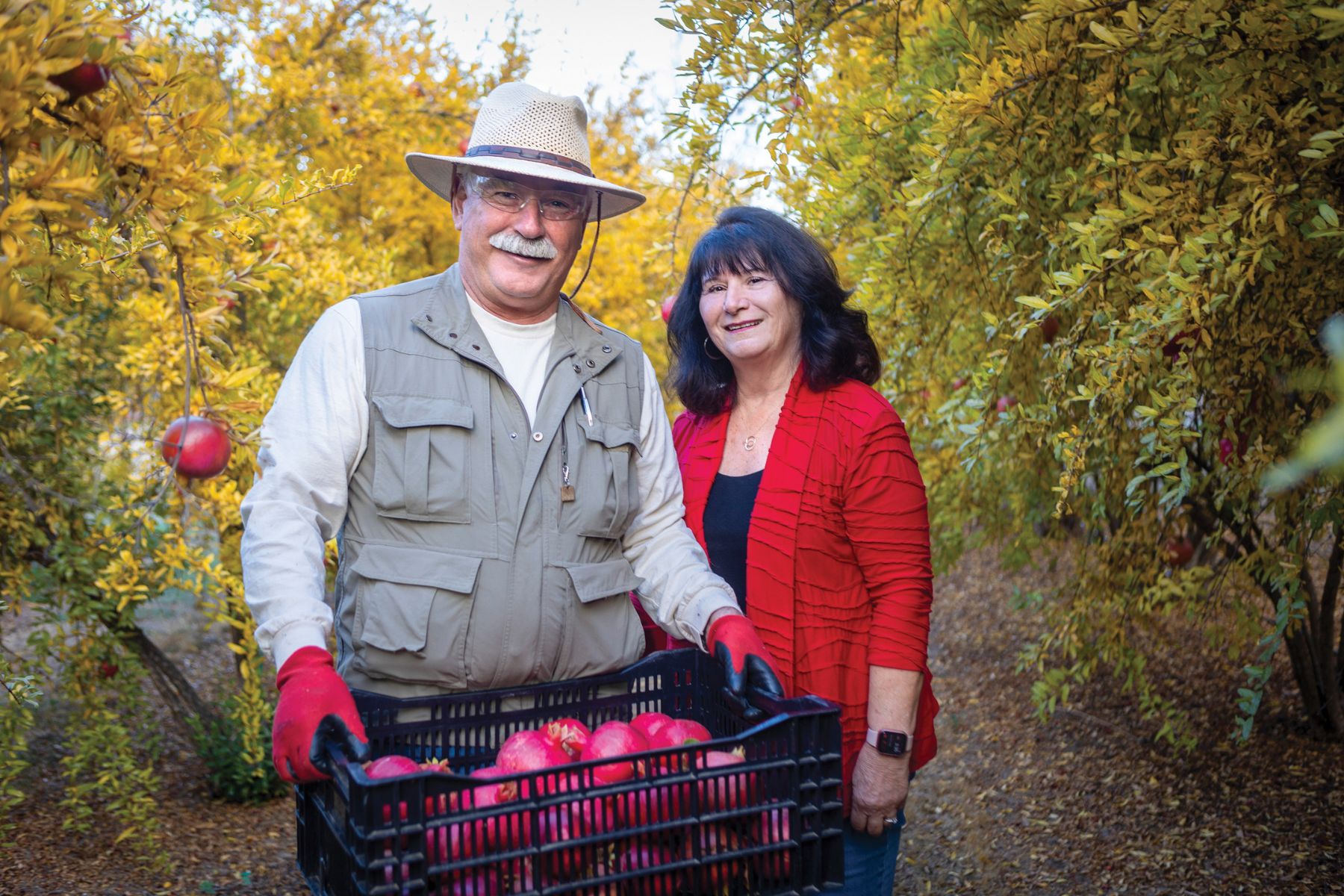
“We finally purchased [the vacant lot] in 1998. I tried to keep up with cutting the weeds to make it more presentable, but it was just a mess,” recounts George Sullivan, who procured the land with his wife, Debra. By a stroke of luck, they encountered developers of a parking garage project in San Luis Obispo who were trucking dirt to Paso Robles. “I asked, ‘Well, how much would it cost to dump the dirt on my corner?’ And they said it was on the way, so we could have it for free,” he says. “That’s when it went from an awkward plot of land to a very well-placed lot.”
The Sullivans started by planting 60 pomegranate bushes of the Angel Red variety, but the plants couldn’t withstand the freeze brought by Santa Margarita weather. From inexperience comes innovation; George and Debra then planted the Wonderful variety, which is less susceptible to freezing and relatively deer resistant. In went 124 bushes on amended soil with plenty of drainage and air movement. They were in business.
Granada Farms
produces thousands
of Wonderful variety
pomegranates at its
Santa Margarita location on El Camino Real
and Murphy Avenue.
George and Debra worked steadily over the next few decades, darting between their day jobs, planning commission meetings and tending to the land. Pomegranates are a fall fruit, harvested as early as late October and into December, so the last months of the year are hectic. Typically, pomegranates ripen on the bush right before Thanksgiving, just in time for the fleshy, sweet bits of the fruit, correctly called arils but often called seeds, to be sprinkled on Turkey Day salads. Whole pomegranates are often used as decoration on holiday dinner tables, providing bright pops of fall color.
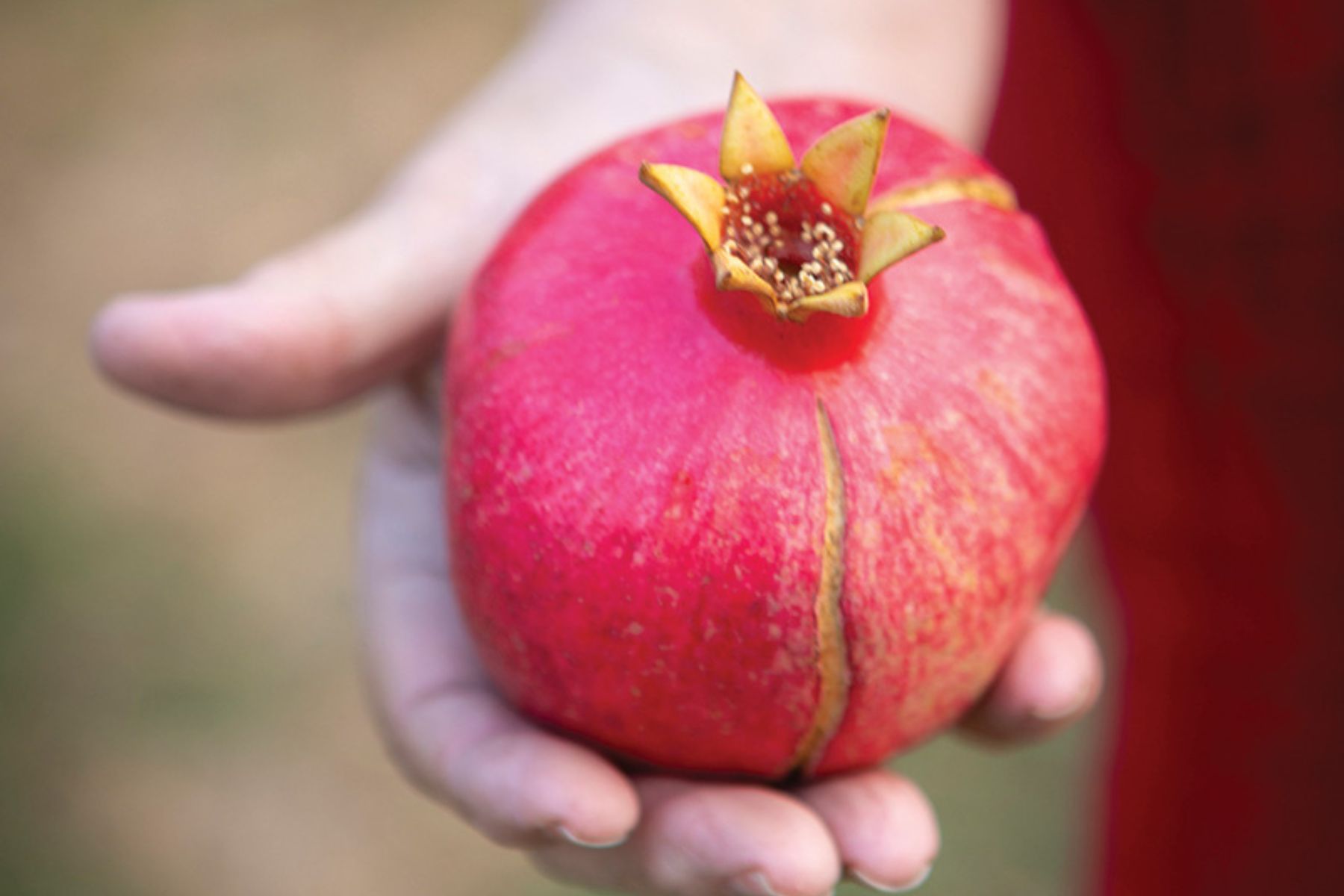
“Really, the ripest and sweetest pomegranates are when they crack. And at the end of their season, they crack open on the branch, and that’s how they propagate — the seeds drop to the ground and new bushes grow,” explains George. “[Some] customers especially love when the fruit is cracked, and very ripe and sweet. But we don’t wait for all of the skins to crack, because some customers want them really round, uncracked. Some buy them just for ornamental purposes. Some customers want the little bitty ones and make a necklace out of them. We try to have something for everyone.”
The fruit is harvested on weekends and sold right there on the farm. In slower years it could take up to seven weekends of selling to move through all Granada Farms’ inventory. Soon George will be retiring from his job in network operations at AT&T, and the stand will be open all week long.
100 percent of the
pomegranate harvest is sold right off the farm, direct from farmer to consumer.
“Debra and I will never need to be members of a fitness center because this farm is all the exercise we need — bending over, pulling weights, trimming, carrying,” he says of the intensive labor. Debra, a florist for over 40 years, compares pomegranate harvesting to picking fruit from a rosebush. Working with pomegranate bushes is like handling cactus branches; the quills can poke right through work gloves. Safety glasses are required and any picker knows that being jabbed by the plant is a given.
“It’s more of a ‘get healthy’ and a learning experience for us,” says George. “Definitely not a ‘get rich’ kind of way to make a living. But we feel very accomplished to have planted and worked together on this, in this town.”
He continues, “It’s a town of mothers and fathers pushing their kids in strollers, and friends riding through on bikes, and townspeople getting in their golf carts and driving over to a restaurant. Or travelers from all over the world going down Highway 58 — we’ve had customers visiting from Ireland, the Middle East; you wouldn’t believe the diversity of visitors driving through Santa Margarita. It’s been a bunch of good people, who stop to ask what our plans are, what’s going on, what are we selling. We’re just very appreciative of this community.”
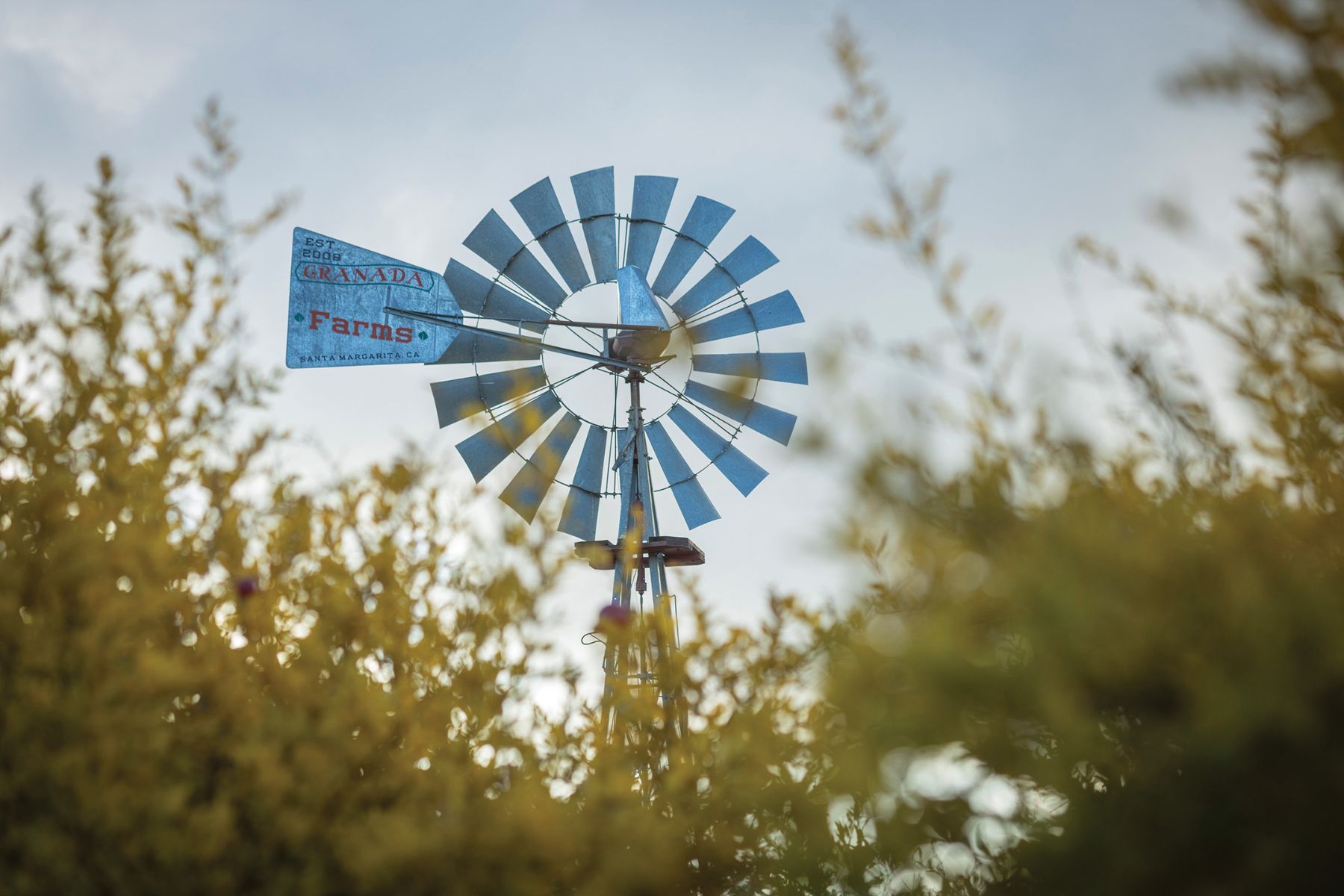
The orchard's windmill stands tall, a welcoming sight for passersby on El Camino Real.
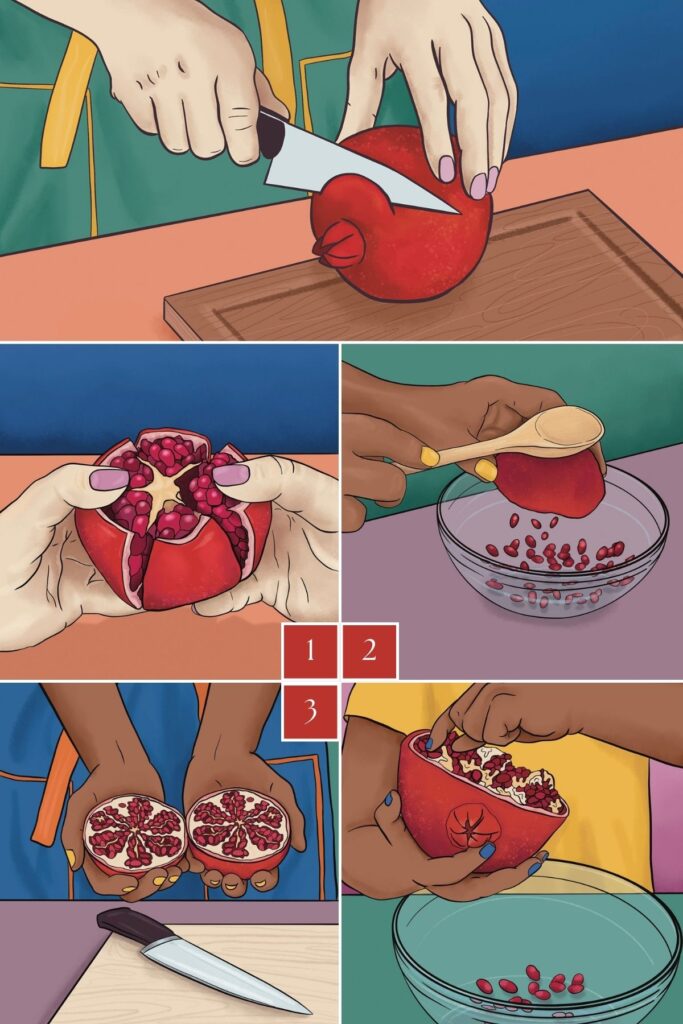
Techniques for Opening a Pomegranate
Method 1 – The ‘panning for gold’ method: Slice off the crown (top of fruit, where it attached to the stem). Slice the fruit into four sections, exposing the white membrane. Pull apart the pomegranate over a bowl of water and use your thumbs to gently loosen the arils inside. They will sink to the bottom of water bowl. Skim off all the loose parts that float and discard them. Drain and eat the arils.
Method 2 – The ‘dissection’ method: Cut off crown and score along the ridges. Peel apart where scored. Hold pomegranate sections with aril side on palm, and rind side up. Hit the rind with a wooden spoon so arils come out.
Method 3– The ‘hand it to the children’ method: Give this fun fruit to the kids and have them get creative finding ways to get to the sweet arils! (This is an outdoor activity, of course. And beware that the bright-red arils can stain hands, clothes and anything else, so use care.)