
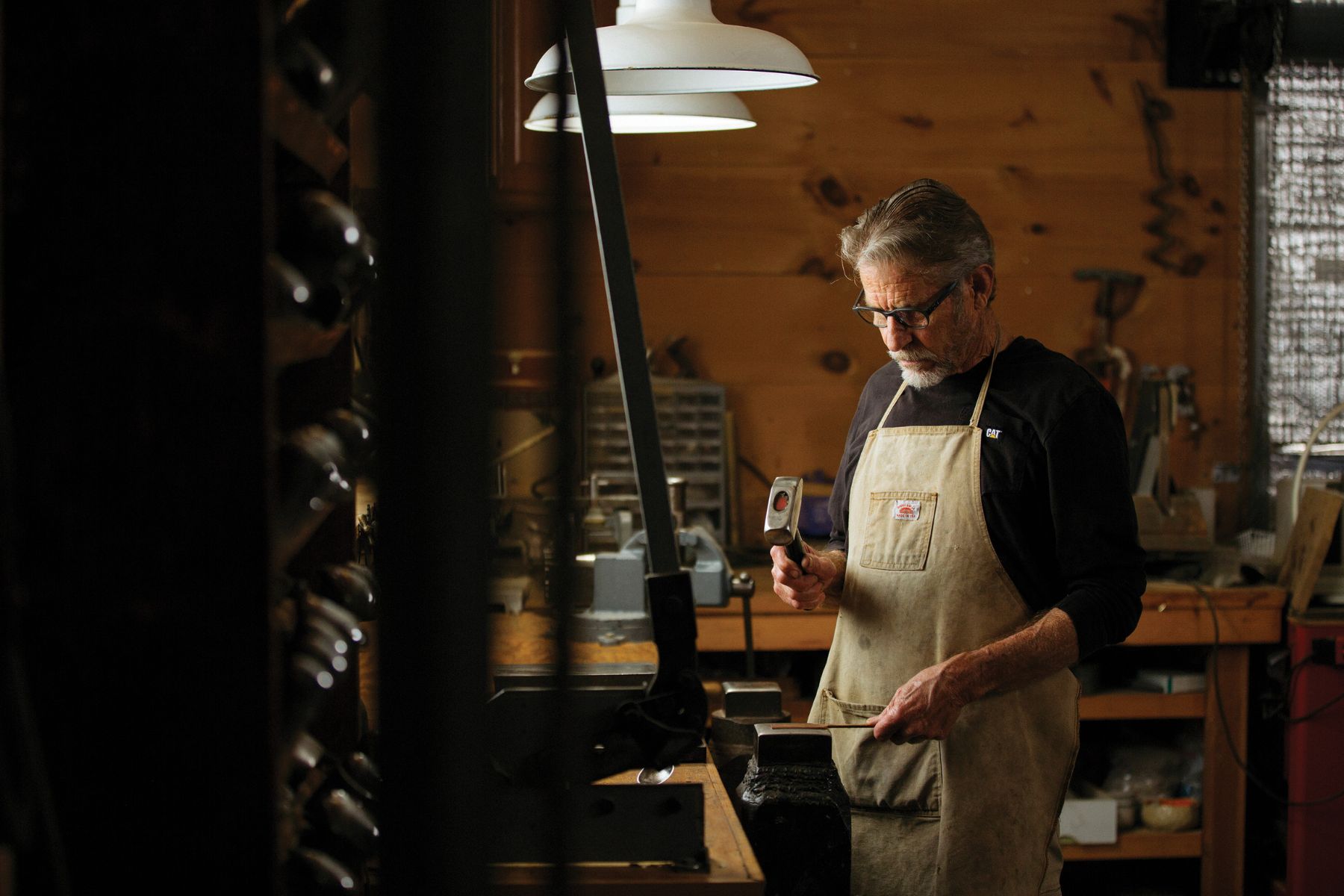
Templeton Silversmith: The Limitless Pursuits of Randy Stromsoe
Story by Scott Lewis
Photography by Sean Stromsoe
Once considered a fading art in the age of mass production, silversmithing is experiencing a flicker of revival. From heirloom-quality silverware to bespoke ceremonial objects and fueled by a growing appreciation for craftsmanship and individuality, this centuries-old tradition is stepping out of the shadows and into a renaissance of relevance. At the forefront is one of the few artists who can be called a master silversmith thanks to his generational training, background and experience: Randy Stromsoe is one of the last traditionally trained silversmiths in America.
There is no one quite like Randy. He operates out of Stromsoe Studios, his private studio in Templeton where Highway 46 meets Old Creek Road. “Randy makes each piece by hand. Period,” says his wife and business partner, Lisa Stromsoe, who has seen him design hand-forged flatware and holloware for as long as they’ve known each other.
For over 50 years Randy has apprenticed in and worked at shops with roots dating back to the early 1900s, collecting tools and carrying on the traditions passed down by the craftsmen he’s worked with along the way. His first big break came at age 19 when he apprenticed under master silversmith Porter Blanchard, “silversmith to the stars” whose customers included actors Joan Crawford and Cary Grant.
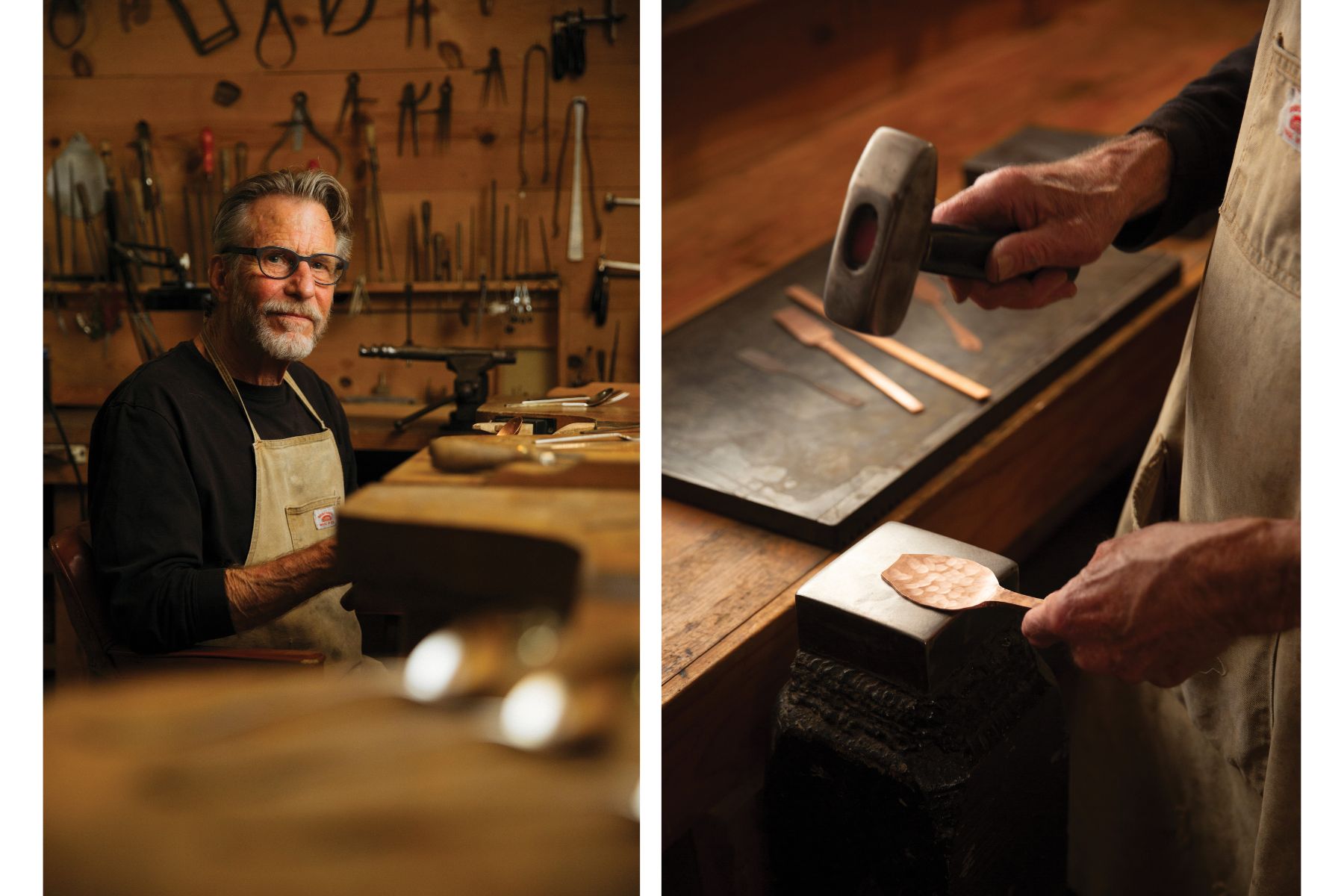
It was here that Randy immersed himself in the minimalist style of silver and pewter work, emphasizing simplicity and integrity of materials. Together they helped many families set their tables, making everything from coffeepots to tankards to candlesticks. “We dealt with all the fine stores in the nation: Cartier, Gump’s, Neiman Marcus. All the places you’d register at if you were getting married back in the ’50s and ’60s,” says Randy. “Once I went to work for Porter, I never looked back. After he passed away [in 1973], I helped run the company for another [ownership] group.”
Over the decades, Randy has produced an array of handcrafted pieces — from presidential gifts during the Bush and Reagan administrations to ceremonial chalices for the Roman Catholic church — each reflecting a blend of historical reverence and contemporary design. His works have graced collections including the White House Collection of American Crafts, and the Renwick Gallery at the Smithsonian. His creations have been presented as diplomatic gifts by the U.S. State Department, symbolizing American artistry on the global stage. And, in a fun opportunity to be in front of the camera, he was one of only four California artisans featured on PBS’s television show “Craft in America.”
Despite a resume that reads like a fit for the upper echelon of society, Randy remains refreshingly approachable. “We’re not elitists at all. Anyone can call, make an appointment, and come over,” he says. Each October during National Arts and Humanities Month, the Stromsoes open their doors as part of San Luis Obispo County’s Open Studios Art Tour, a program of the SLO County Arts Council. Visitors are invited to step inside Randy’s workshop, the heart of his creative process, to see where the magic happens and engage in thoughtful conversations about his trade.
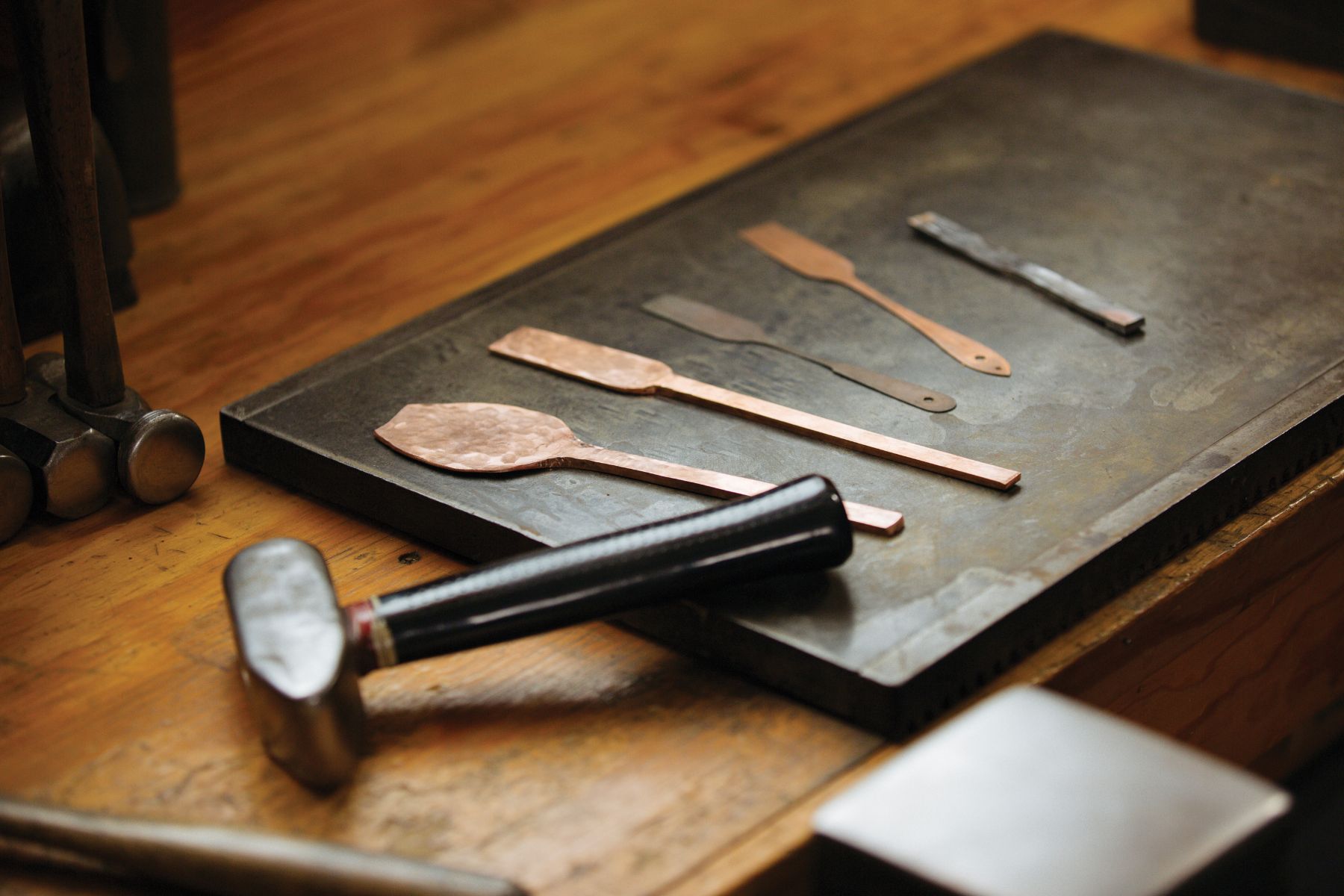
In these conversations it is evident that Randy has a profound love for the art of silversmithing, and its deliberate detail. “He can name every culinary piece of flatware, from a salmon slicer to an asparagus server, and he has made them all,” says Lisa. “To set a proper table takes about eight pieces of silverware minimum per person.” When meals were a more formal affair, the variety of flatware options were robust, from giant fish forks to shallow mayonnaise spoons, from a 5 o’clock teaspoon to a bonbon spoon, and every type of charcuterie serving utensil imaginable. While demand for this kind of craftsmanship has seen a lull over the past decades among the mass market of consumers, chefs still deeply appreciate the attention to detail, says Lisa. “Chefs want their creations to be celebrated. The food doesn’t stop in the kitchen; the presentation continues at the table.”
It’s no surprise then that chefs — artisans in their own right — connect with the dedication behind silversmithing. Both crafts demand precision, patience and physical effort; silversmithing, in particular, is as taxing as it is meticulous. “It’s laborious and physical,” says Randy. “It’s taking a bar of silver and giving it 1,100 hammer blows to make one fork. It is hit 1,100 times in different directions, in different ways.”
Career longevity in silversmithing can be elusive but Randy offers a masterclass in both elegance and endurance. Now, as interest in the craft resurges, his staying power is finally getting its due. Long before the shift away from throwaway culture, Randy believed in an alternative — one where handcrafted work inspires, preserves a moment and honors a way of life. He stayed the course, letting his work speak — and serve — for itself.