If there’s a single place where a cross-section of America gathers — before dawn over a mug of coffee, late at night sharing a basket of fries, or on a lazy Sunday with a short stack of pancakes (and a side of gossip) — it’s the diner. The long counters, those neon signs and the hiss of flat-top stoves project true Americana.
Before diners became the backdrop of road trips and Hollywood films, it all started in the 1800s with the simple horse-drawn lunch wagon that would sell sandwiches, pies, boiled eggs and drink refills to late-shift workers and newspaper men. The hot food served fast, at all hours, rose in popularity as the carriages parked curbside and remained open deep into the night. They were equal part community hub and comfort kitchen. When the wagons evolved into permanent structures, a new architectural build out emerged as stainless steel replaced wood, and a long, streamlined silhouette influenced by railroad dining cars became the norm. The menus were comforting and familiar and offered many options to appeal to even the pickiest guest, from eggs prepared in any style to tuna sandwiches, patty melts and pies.
Diners served everyone: factory workers, traveling salesmen, families on the road, night-shift nurses, young couples on first dates and regulars who claimed the same counter stool every day. Even as cities modernized and restaurant trends came and went, diners endured through adaptable menus with homestyle cooking, and prices that stayed within reach. And their soul never changed.
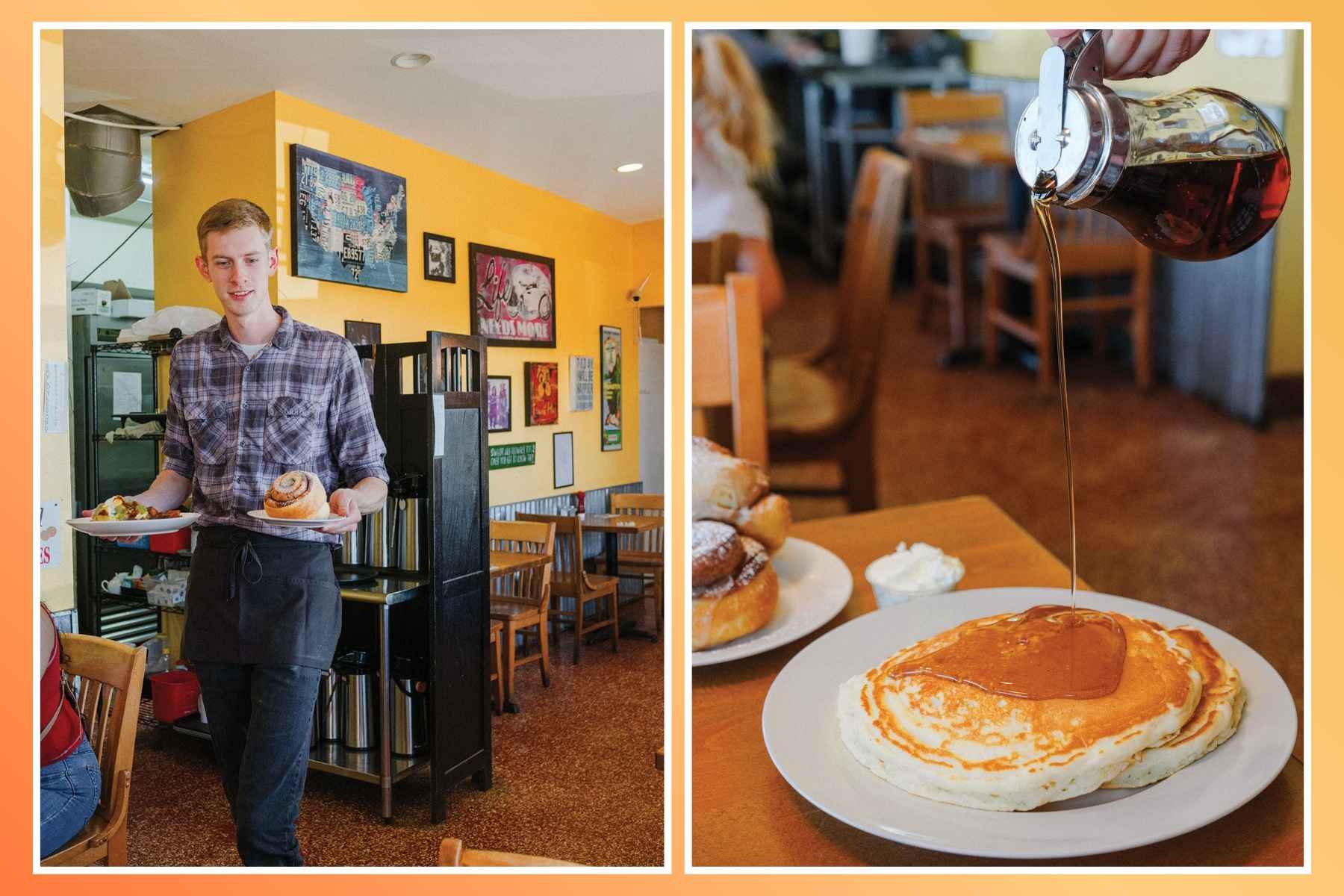
Saber, doing what the restaurant does best:
serving up food made with care and warmth. Pancakes remain the definition of diner comfort food.
“Diners have their own mechanics,” says Kirk Sowell, Co-Owner of Frankie & Lola’s Front Street Café in Morro Bay. “No matter the economy, people will still go out. A simple pancake won’t strain a budget—but it can brighten a day.”
Kirk owns his eatery with wife, Barrie. Before this version of Frankie & Lola’s existed, Kirk, who trained at the California Culinary Academy and then worked locally at Summerwood Winery, spent nearly a decade eyeing this compact space. “I wanted something of my own,” he says, “and this spot was along the water, but not on the water. With its huge parking lot, that convenience is what makes it work.”
He imagined transforming it into something edgy and intense, filled with tattoo art and upscale plates. Barrie, though, envisioned warmth over grit. “She wanted it welcoming,” he says. “I learned so much from her.”
They named the café after the Jimmy Buffett song “Frank and Lola.” Like a great diner, “it’s timeless,” Kirk says. “It works now, and it’ll work in 50 years.” Inside and out, the café seats just about 40 guests, making the space feel less like a restaurant and more like an extension of the Sowells’ nearby home.
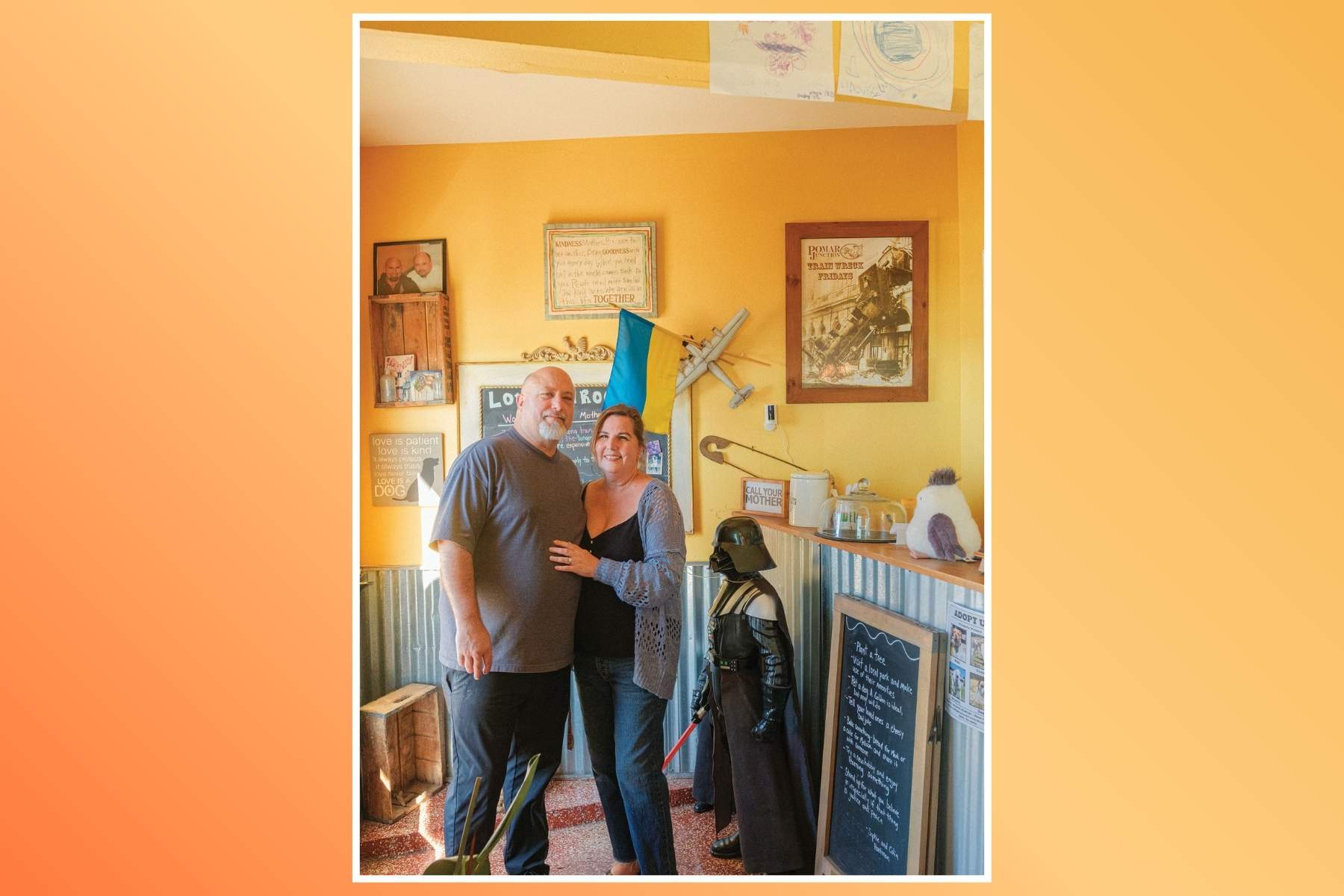
Frankie & Lola’s Co-owners Kirk and Barrie Sowell named the café after Jimmy Buffett’s playful tune “Frank and Lola.”
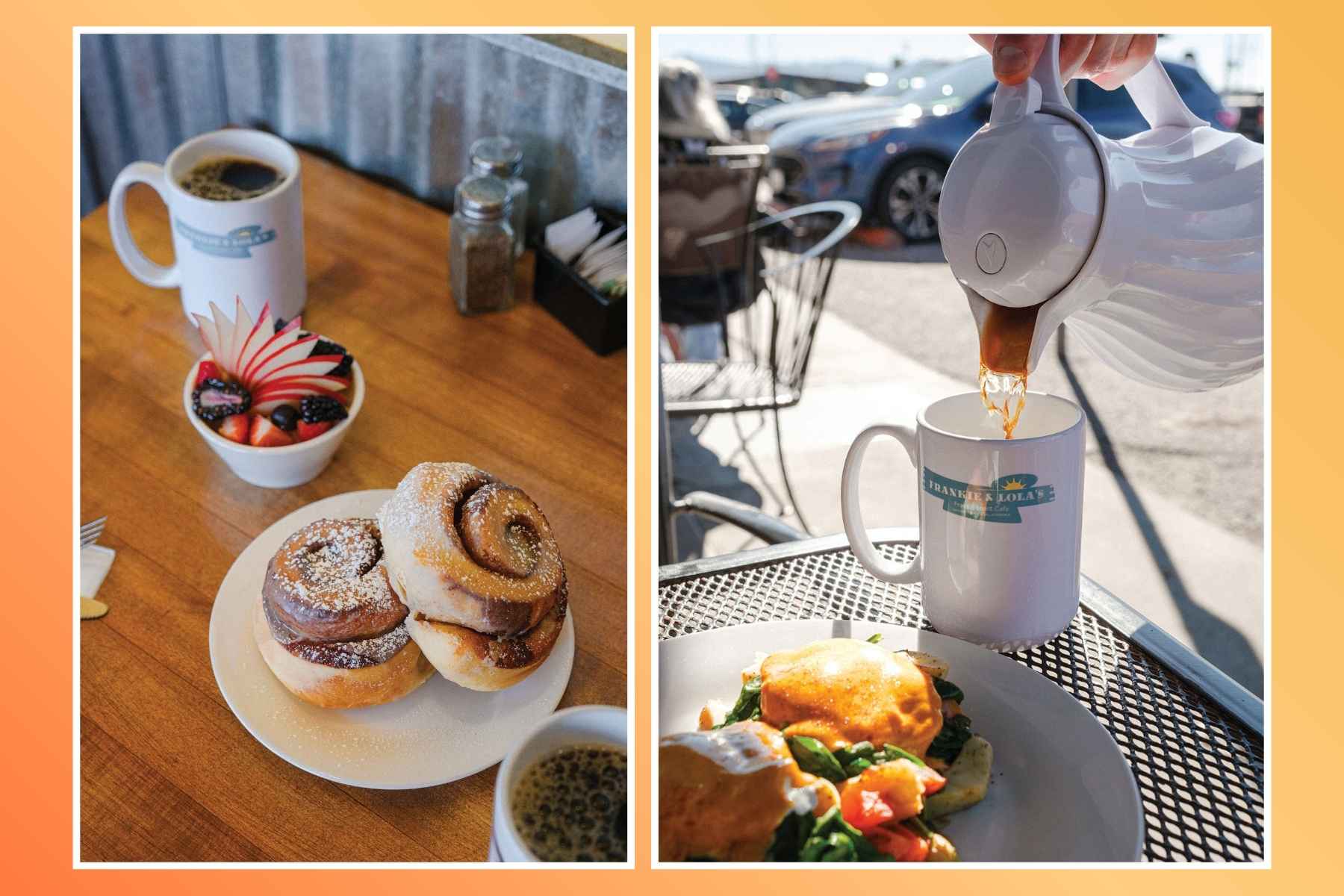
All food at Frankie & Lola’s is made from scratch, like their breads pictured here in the ‘Come Together’ toast; house-made cinnamon rolls are soft, sticky, spiraled with spice and served with a dusting of sugar. Eggs benedict and a hot cup of coffee to start the morning.
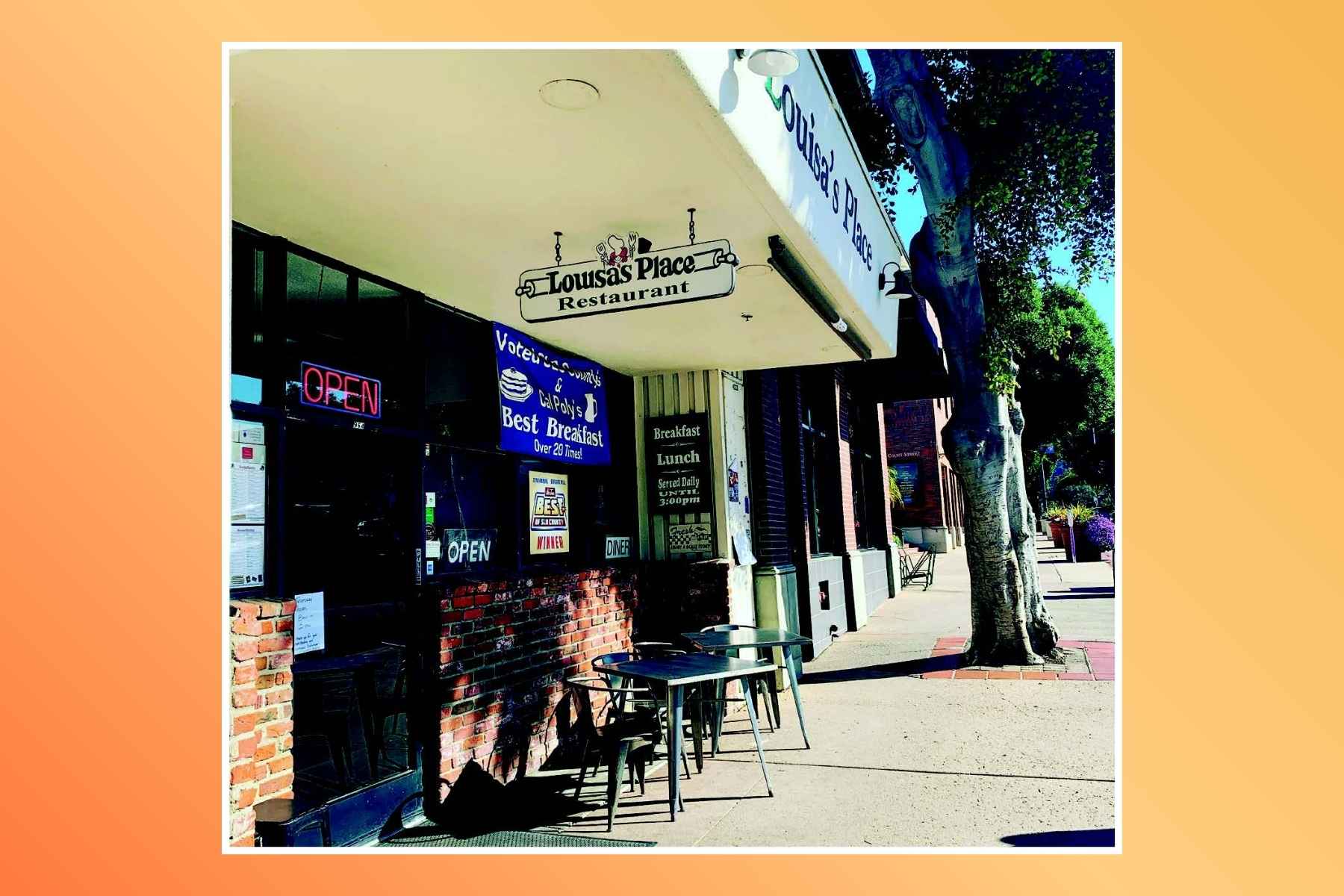
Fifteen miles inland in San Luis Obispo, Louisa’s Place carries the soul of a traditional diner with a softness that is intentional; a place that helps guests set down their struggle — even if briefly — and pick up a fork. Founded in 1976 by Louise Webb, the diner quickly became a neighborhood staple where locals gathered for breakfast and conversation. Current Owner Aubrey Pyle carries on that care. She bought the diner in 2019, years after moving to San Luis Obispo from the Central Valley with her husband to raise their children.
“I applied to Louisa’s as soon as we moved,” she says. “I’ve always been a breakfast waitress.” She fell in love with the regulars, the rhythm of the restaurant and the belonging it provided. So when the chance came to buy the restaurant from the Sweeney family, who had purchased it from Louise in 1991, Aubrey didn’t hesitate. “I couldn’t imagine myself doing anything else,” she says.
Students, longtime locals, travelers, families and international visitors all filter through its Higuera Street doors, day after day. Weekdays are calm and familiar. Weekends are joyful chaos, with the kind of bustle and familiarity Louise Webb once dreamed of. “We know our regulars by name, and their breakfast orders,” says Aubrey.
Louisa’s Place has cracked and served thousands of eggs since 1976; the Louisa’s Place sign hanging on Higuera Street is a familiar beacon for longtime locals.
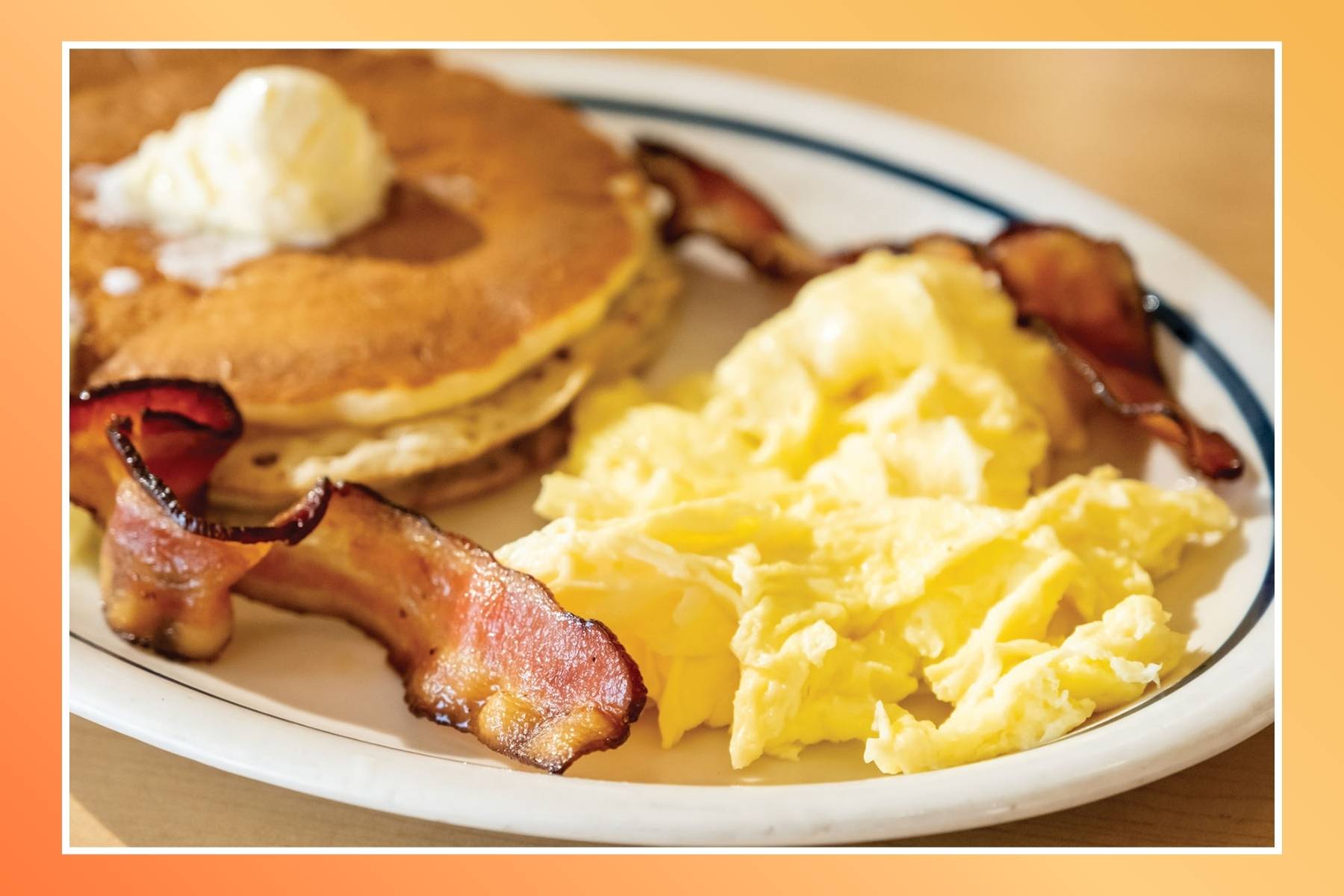
Louisa’s Place remains exactly how diners were always meant to be: warm and dependable, without modernizing away its charm. There’s no better feeling than when the food hits the table — and at diners, boy, does it arrive fast. The eggs made exactly how you like them, perfectly crisp bacon, the stack of pancakes with a delightful scoop of what looks like ice cream but is actually butter, melting atop.
Kirk carries respect for this deceptively simple craft of short order cooking. “Everyone thinks high-end cuisine is the hardest,” he says. “But scrambled eggs? They’re driven by just a single ingredient. You can’t hide.”
That reverence comes through in every dish: house-made corned beef, hot cinnamon rolls and cornmeal pancakes that Kirk says “go straight down to your soul.” At Frankie & Lola’s, nearly everything is made from scratch: granola, French fries, a variety of breads — pain au levain, seeded wheat, rye. Even the fruit cup changes with the seasons, shifting with whatever is at its peak, from d’Anjou pears to Belle de Boskoop apples. Kirk also weathered the supply chain shocks of recent by protecting the customer experience, even when in 2025, the cost of eggs rose from $14 per case to over $160 a case.
The philosophy is simple: Diners stay connected to the neighborhood and its history with its down-home style of hospitality. “To others, food is the most important thing. It isn’t. Service is more important,” says Kirk. “Great service leaves you with a great feeling.”