Goshi Sushi dishes

A Living Legacy: Goshi is a San Luis Obispo Sushi Staple

By Jonathan LaFerrara

Photography by Richard Fusillo

Few foods have transformed America’s culinary identity as fundamentally as sushi. When it first arrived in the States in the mid 20th century, sushi was a curiosity. Americans had long been familiar with the elegant fine dining of French cuisine, but the assemblage of raw fish, rice and seaweed was a borderline art form that felt foreign to the Yankee palate. For years it lived mainly at the edges of coastal metropolises like Los Angeles, New York and San Francisco, introduced largely through Japanese immigrants who brought with them not only recipes but a philosophy of food as both nourishment and art.

By the 1980s and ’90s, sushi had crossed into the mainstream, moving from niche restaurants tucked away in cultural districts to glossy menus in nearly every major city. It represented more than just a trend; it was a shift in how Americans thought about dining. Sushi is about freshness, balance, restraint and, above all, experience. It’s an invitation to slow down, to consider each bite and to marvel at the beauty of food presented as craft.

While sushi culture found a natural home in large cosmopolitan cities, it also began to take root in smaller communities like San Luis Obispo and Paso Robles, where one man’s vision helped bring Japanese cuisine to the Central Coast.

That story begins in 1989, when Takeshi Yamada took full ownership of a sushi restaurant in downtown San Luis Obispo. The space had previously been Tsurugi, a partnership venture, but when Takeshi purchased his partner’s shares and assumed complete ownership, he reimagined it as Goshi (a play on his personal nickname).

Takeshi’s mission was clear: to bring traditional Japanese cuisine to a town that was just beginning to develop its broader culinary identity. It was about food, and it was also about cultural exchange. Locals embraced Goshi’s thoughtful approach and by 2002, a second location opened in Paso Robles.

Though Takeshi passed away in 2009, his vision continues to shape the restaurant today. The Paso Robles location remains family-owned, led by his daughter, Natsuko Nishimura, and son-in-law, Yugo Nishimura, who serves as Head Chef.
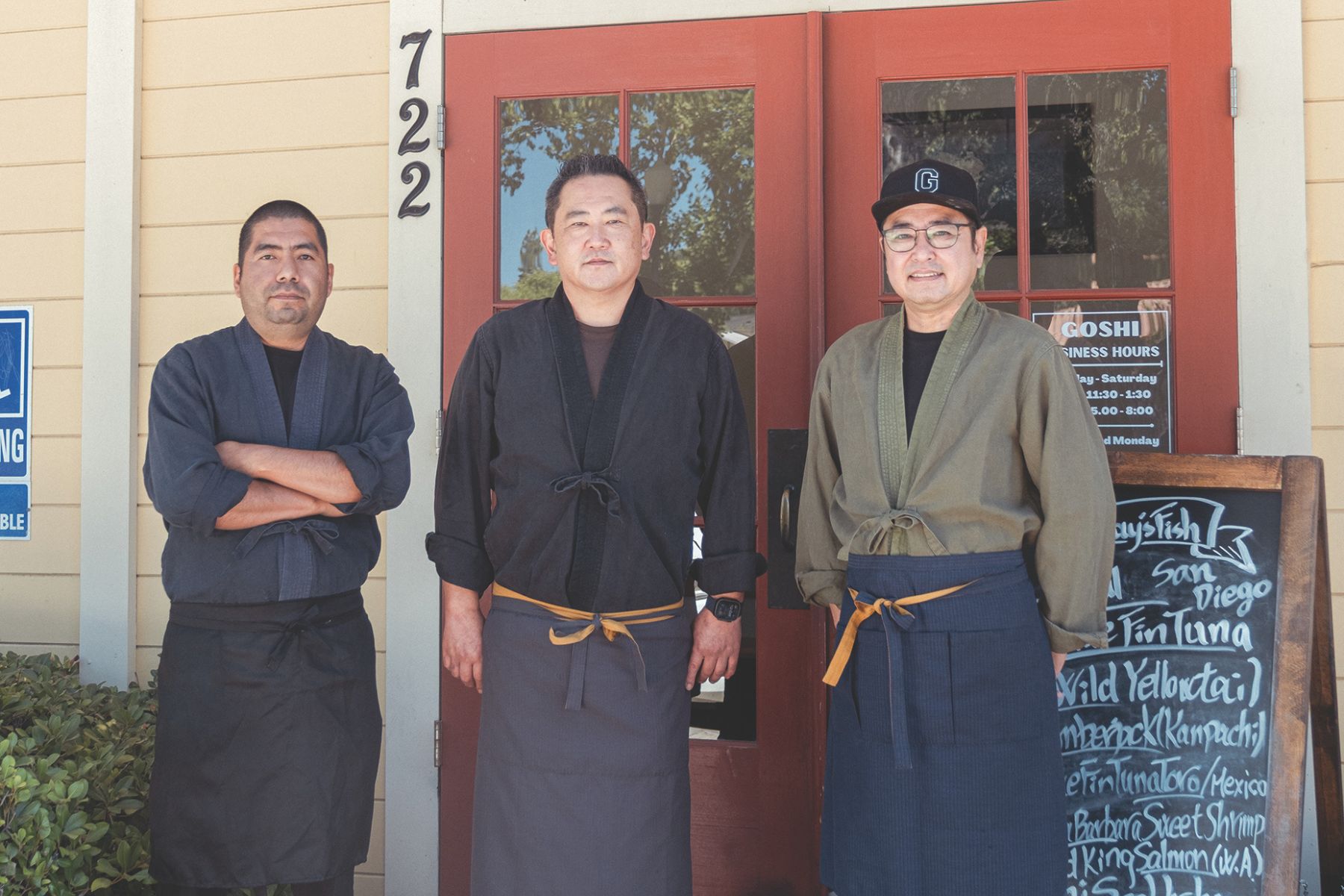
Chef Joel Trujillo, Chef Yugo Nishimura and Chef Shoichi Ogiwara.
A Chef’s Journey

Born in Tokyo, Yugo arrived in California as an exchange student. His temporary stay became permanent when he remained in the U.S. and honed his craft as a sushi chef. His training took him from Tokyo to San Francisco before joining Goshi’s team in 2002, where he helped open the Paso Robles location.

“Preparing traditional Japanese food is not just a business to us,” Yugo says. “It’s all of our passion and hobby as well.”

More than two decades later, Yugo continues to share that passion not only through Goshi Paso Robles but now its next evolution. He is partial owner of a new concept scheduled to open in 2026 inside the Paso Bottle Shop, the public market on Railroad Street in downtown Paso Robles. The yet-to-be-named restaurant will highlight Japanese street food tapas alongside a sake bar, offering a casual, vibrant complement to Goshi’s traditional fare.

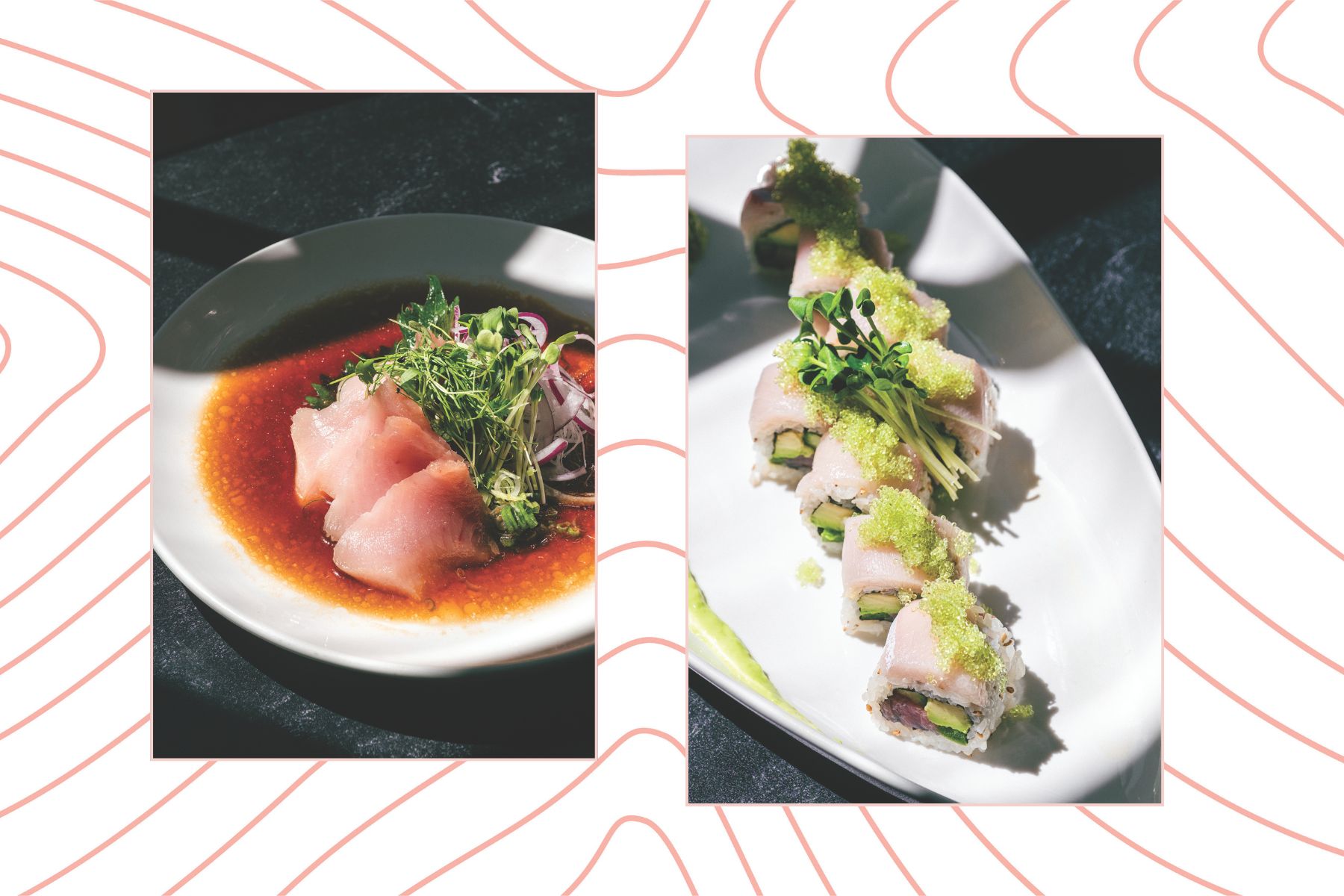
A charming ceramic cat found at many Japanese restaurants, sits with one paw raised in a welcoming gesture; spicy albacore roll with garlic chips, smelt roe and green onion, dressed with spicy mayonnaise and sriracha.
The Maneki-neko, a charming ceramic cat found at many Japanese restaurants, sits with one paw raised in a welcoming gesture; spicy albacore roll with garlic chips, smelt roe and green onion, dressed with spicy mayonnaise and sriracha.
Bridging Tradition and Innovation

Sushi may be rooted in tradition but it thrives on collaboration. At Goshi, Yugo is joined by a team of seasoned chefs who create dishes reflecting both skill and care. Sous Chef Shoichi Ogiwara, trained in Nagano, Japan, has been with the restaurant since 2002. Joel Trujillo, another key member, trained in-house under Yugo for a decade before stepping into his role as Sushi Chef. Together with a crew of 12 sushi and kitchen chefs, most with over four years’ service at the restaurant, they have fortified Goshi together.

Ask Yugo about his favorite food and his answer is immediate. “Sushi is my favorite number one food of all time,” he states, happily. “Especially eating it outside of Japan, here in California. I’ll eat hamburgers, Mexican food, Italian food… But eating Japanese food in a different country makes it taste even better.”

It’s that perspective of Japanese food seen through a Californian lens that defines the menu. Diners continue to return for signature dishes like albacore tataki — a sashimi preparation served with herbs, vegetables and a delicate vinegar sauce poured over the top — and the wasabi yellowtail roll and the spicy albacore roll with garlic chips. These enduring favorites balance traditional Japanese flavors with a more Americanized flair.

Beyond sushi, dishes like miso-glazed black cod — slices of cod marinated in miso, then grilled — showcase the kitchen’s range. And for diners who crave a personalized experience, Goshi offers omakase options, chef’s-choice menus that highlight the very best fish available on any given day. Omakase can take the form of sushi and sashimi or cooked dishes and dessert, ensuring that each meal feels like a once-in-a-lifetime dining experience.

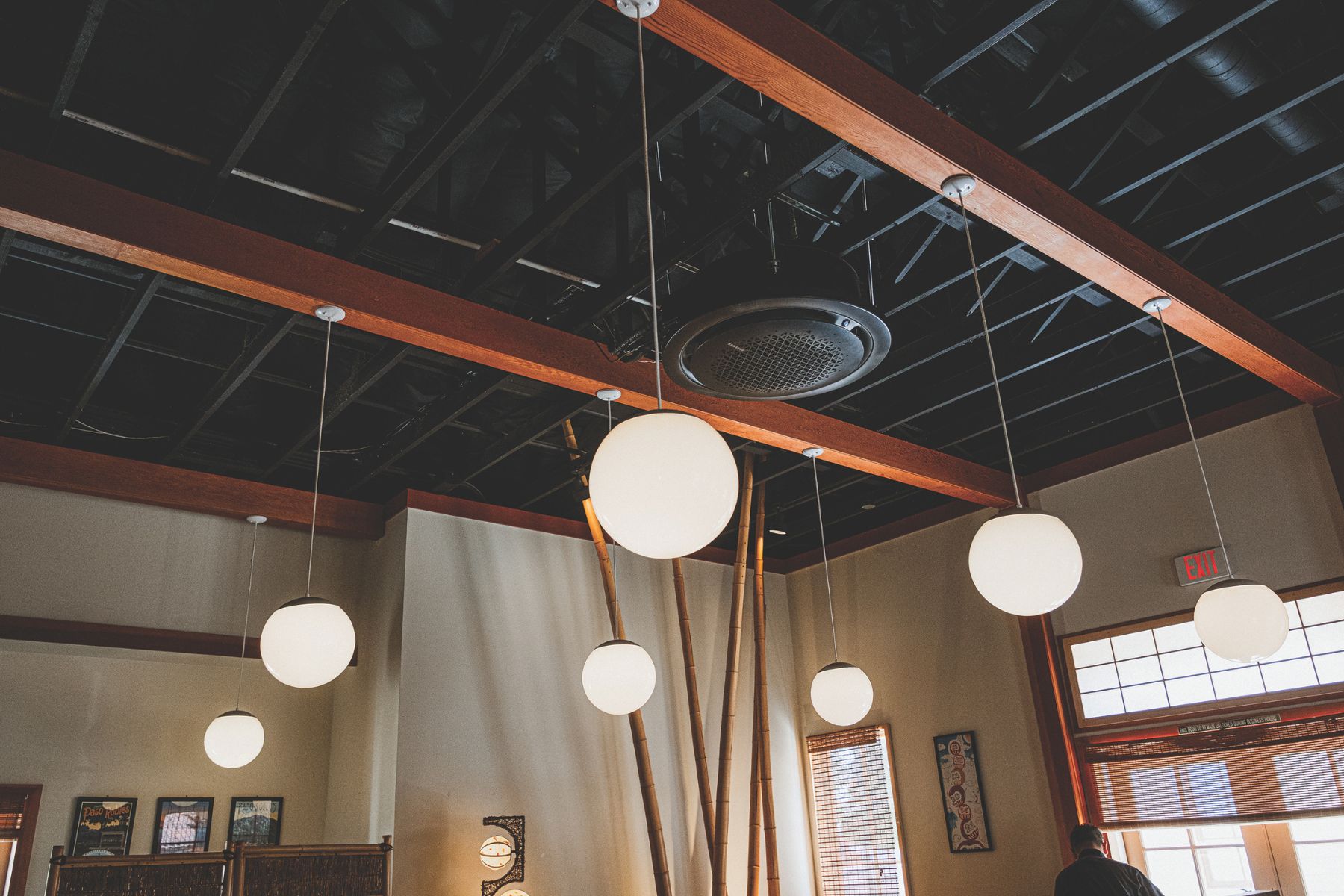
setting and high ceilings.
The dining room at Goshi blends traditional Japanese pieces with its modern setting and high ceilings.
The Future Is Fresh and Bright

The restaurant is undergoing a remodel that will expand its outdoor patio, adding seating for an additional 30 guests when it’s completed in early 2026. The new public market project promises to extend the Goshi legacy, introducing a new generation of diners to Japanese cuisine.

Though the restaurant evolves, its heart remains unchanged. This passion has been passed down from Takeshi Yamada to his family, nurtured by longtime chefs and sustained by loyal diners. A visit to Goshi is more than a meal; it’s a celebration of tradition, a story of cultural exchange and proof that even in a small Wine Country town the art of sushi feels right at home.