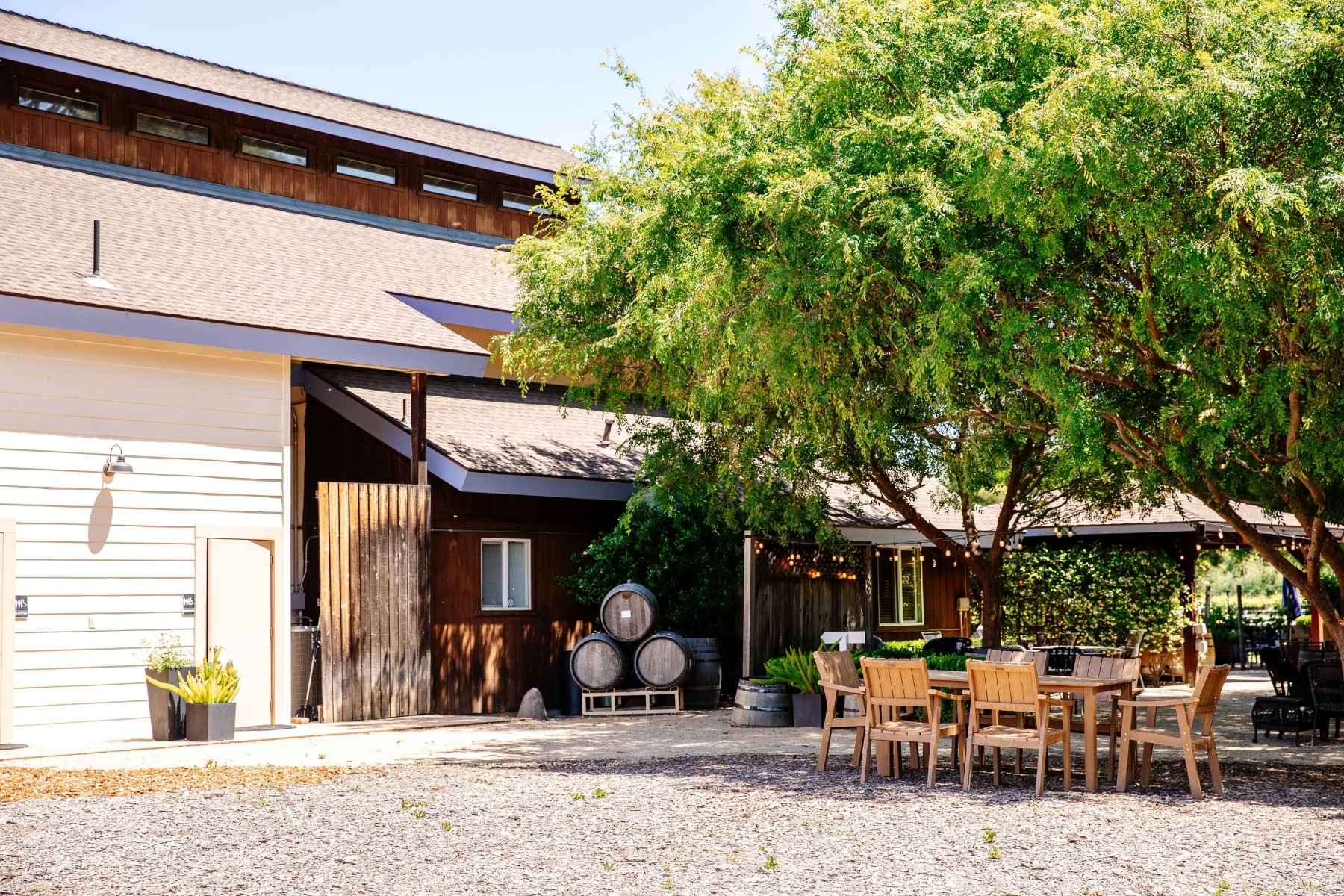
Claiborne (Clay) Thompson and Fredericka Churchill founded their family’s wine label in 1983, but it would take another 13 years for the two former educators to lay down permanent roots in the heart of San Luis Obispo’s wine country. They opened their Edna Valley winery and tasting room 30 years ago, in 1996. However, it can’t be referred to with the oft-used “brick-and-mortar.” That’s because Claiborne & Churchill’s winery was the first commercial building in California to use innovative straw bale construction.
Yes, straw bale. And don’t go cueing up the “I’ll huff and I’ll puff” reel, because no wolf-induced bluster could blow down this building. Straw bale construction is not only remarkably resistant to high winds, but also to fire, earthquakes and significant temperature swings.
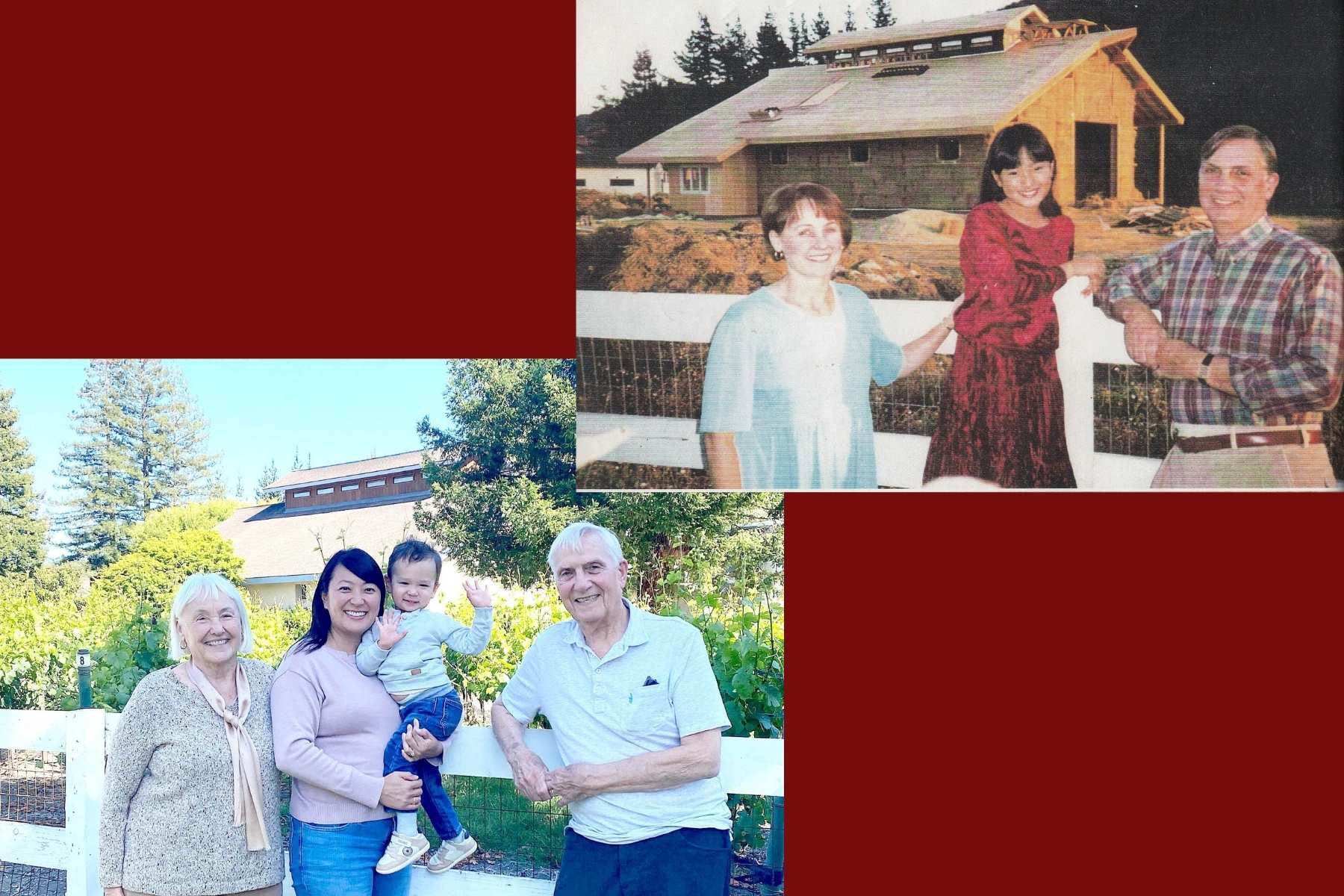
A side-by-side of Clay and Fredericka with their daughter, Elizabeth, in front of the winery during construction of the straw bale building in 1995; the Thompson Family today: Fredericka, Elizabeth, grandson Benjamin, and Clay.
The Road Less Traveled
It would have been easier to launch a new winery with well-known varietals, but Clay and Fredericka wanted to produce wines they were passionate about, particularly dry Alsatian-style Rieslings and Gewürztraminers. In the 1980s, that meant a lot of explaining about how theirs were not sweet dessert wines, rather traditionally crisp and food-friendly.
Maybe that touch of maverick thinking primed them to being open about a fledgling type of construction in California.
California rice farmers used to set their fields ablaze after harvest to get rid of the residual rice straw, which is notoriously fibrous, slow to decompose and has negligible nutritional value. Burning got rid of most of the stubborn straw, but also threw billows of black smoke into the air. To help improve air quality, the state banned that particular form of agricultural burning in 1991, prompting growers to find other uses for their post-harvest detritus. One particularly suitable application was straw bale construction.
Straw has been used for constructing dwellings for millions of years, perhaps most recognizably in centuries-old indigenous structures and European thatch roofs. When mechanical balers were invented in the late 1800s, it became possible to use hay and straw as literal building blocks, and straw bale construction gained particular traction in the Midwest, especially Nebraska. Since then, its popularity has ebbed and flowed, but it continues to be used thanks to its eco-friendly attributes.
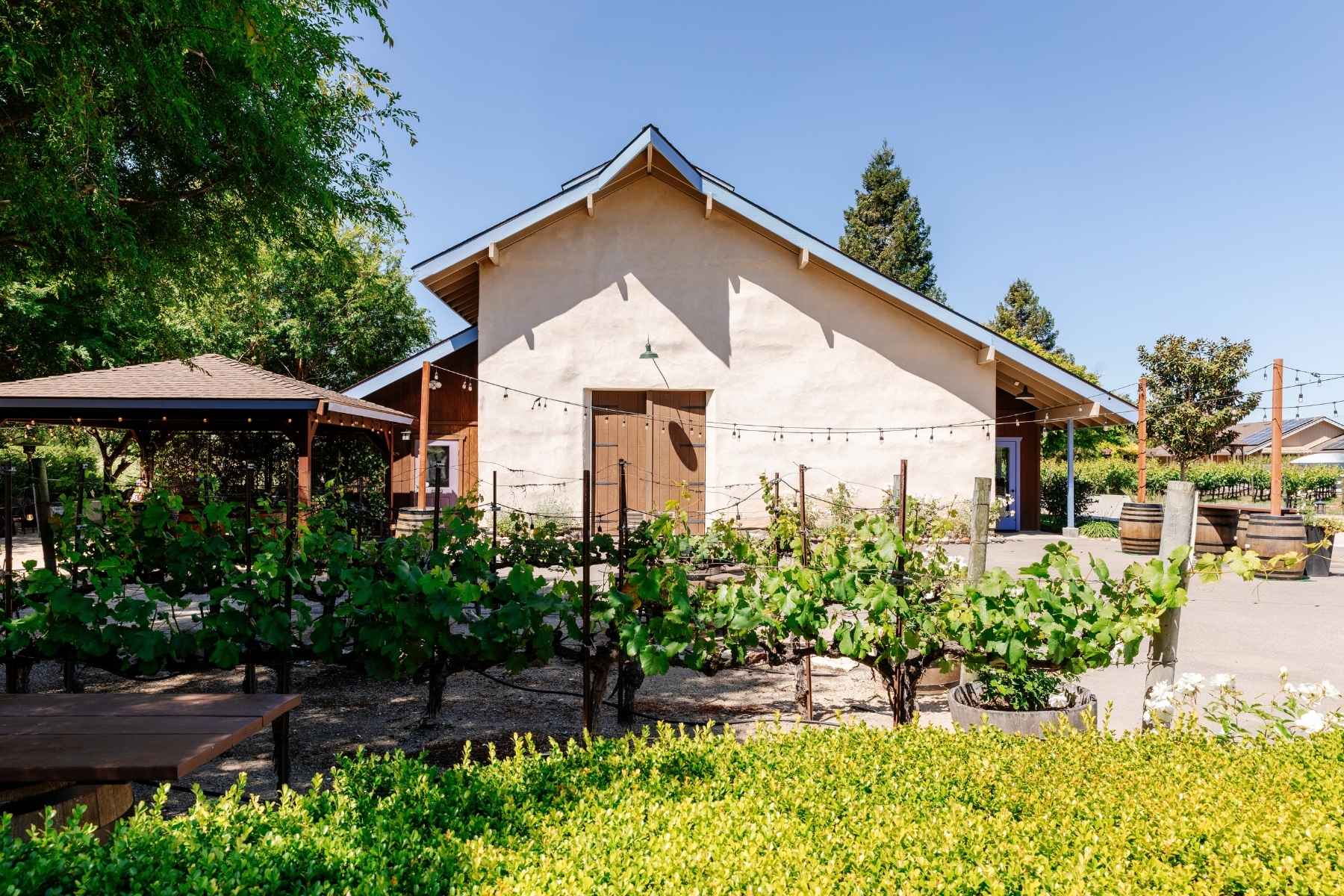
The completed straw bale winery and garden today--a landmark recognized for its sustainable construction and natural insulation.
Putting Down Roots
Clay and Fredericka scoured San Luis Obispo County for an appropriate and (perhaps most importantly) affordable spot for their winery. In 1990, they were able to purchase almost six acres on Carpenter Canyon Road. The Edna Valley property already had two residential buildings, separated by a “field in between that was rented for horse grazing,” recalls Clay. That field is now home to the winery and tasting room.
When the couple got serious about shifting their growing winery operations from a rented commercial space, the next step became finding an architect. “We learned about Marilyn Farmer [since retired from her Habitat Studio in San Luis Obispo] from a friend of ours who taught architecture at Cal Poly. He recommended her as a good fit because of her respect for the environment and dedication to sustainable living,” says Clay.
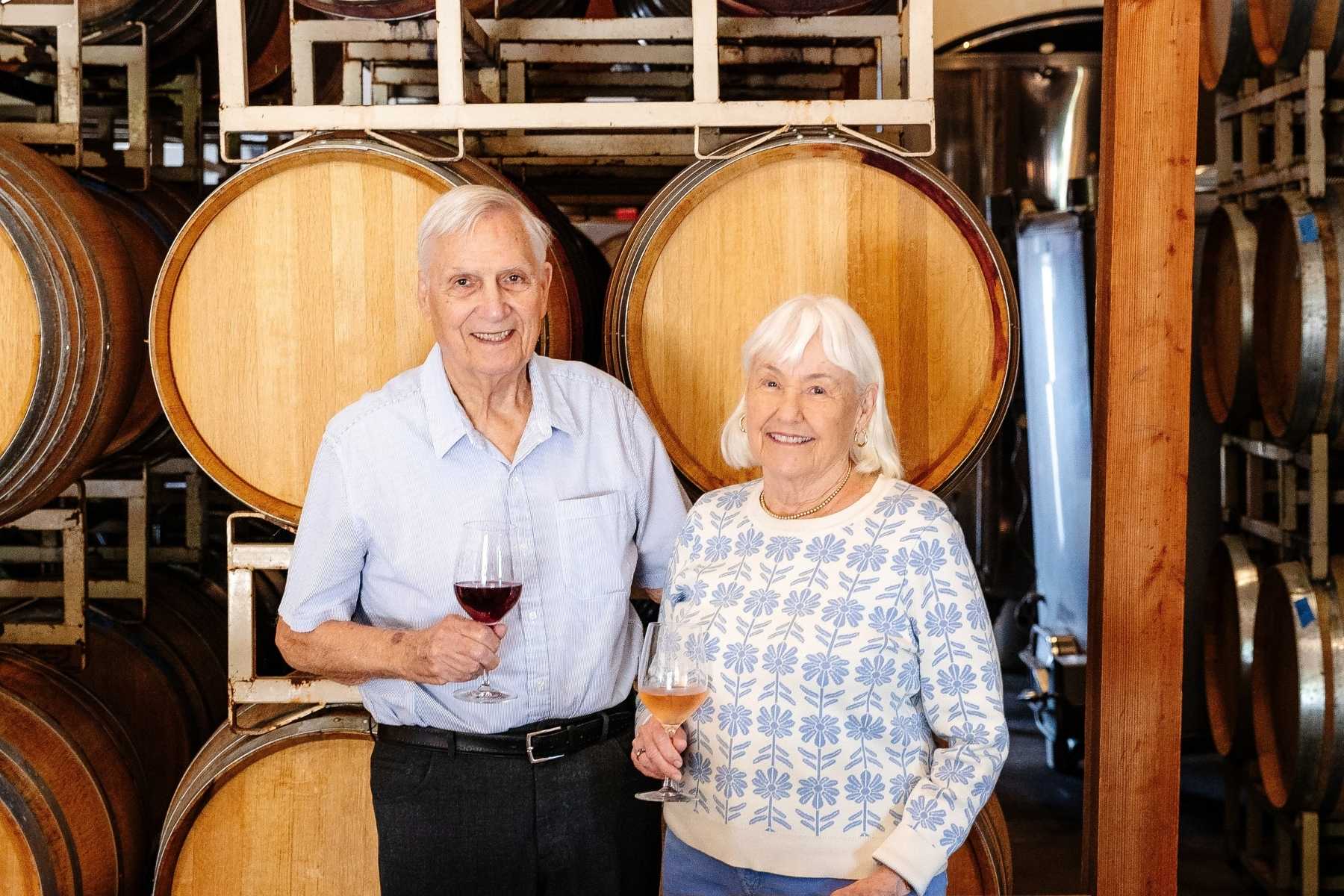
Clay and Fredericka, whose passion for Alsatian-inspired wines and sustainable winemaking, have shaped the winery for more than four decades.
Construction began in August 1995, and it looked for a while like any other building process. A concrete slab was poured, and wooden post-and-beam framing went up. Then came the delivery of 360 straw bales. All at once, much to the delight of Clay and Fredericka’s then 9-year-old daughter, Elizabeth, who remembers gleefully scampering all over them.
Because straw bale construction is fairly straightforward, Clay and Fredericka were able to host a good old-fashioned barn-raising.
“We had about 35 people of all ages helping us — family, friends and some people just interested in this type of building,” Fredericka says. The November day was akin to a workshop, with the volunteers following the instructions of several experienced straw bale builders. And when dusk finally fell, everyone was treated to a hearty dinner of Fredericka’s lasagna and Claiborne & Churchill wines.
The final touches were completed in January, just before Clay and Fredericka’s lease ran out on their rented space. That meant a frenzied 36 hours of moving everything to the new space, including racking out gallons of wine from dozens of barrels before they could be transferred. On February 1, 1996, the doors to Claiborne & Churchill Winery opened to the public.
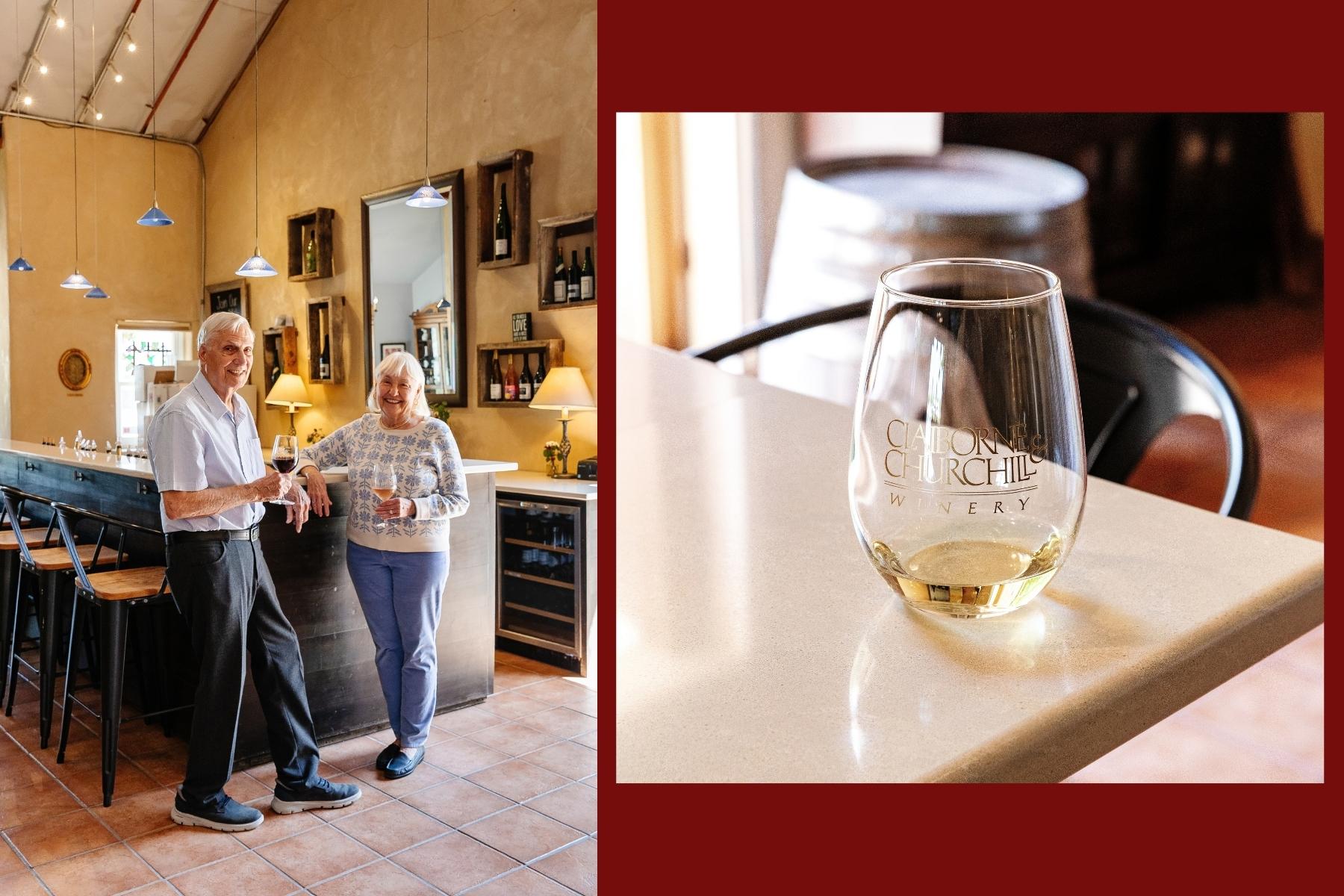
The lush tree provides much appreciated shade while tasting wines in the courtyard.
Maintaining a Key Promise
Straw bale construction offers an intrinsic benefit of particular importance to wineries: climate control. The dense, thick walls maintain an extremely consistent temperature, as proven by Elizabeth’s sixth-grade science project. For two weeks in 1997, she dutifully recorded the thermometer readings of the winery, an uninsulated garage and outside. While the graphs of the last two zigzagged, the winery’s temperature remained relatively stable. And yes, she got an “A” for her efforts.